
History of Women’s Fashion: Style as Social Freedom
Over 90 percent of American women say their wardrobe choices reflect their sense of identity and personal values. Fashion is more than just trends; it’s a meaningful journey shaped by history, social change, and the desire for self-expression. Exploring the evolution of women’s fashion reveals how every era has brought new ways to stand out, own your style, and fill your closet with love for who you are.
Table of Contents
- Defining Women’s Fashion Evolution And Misconceptions
- Victorian Silhouettes And Social Expectations
- 1920s Flappers To 1950s Feminine Ideals
- 1970s Liberation And Modern Minimalism
- Lasting Vintage Influence On Modern Wardrobes
- Personal Reflections: Blending Eras Today
Key Takeaways
| Point | Details |
|---|---|
| Fashion as Empowerment | Women’s clothing has historically represented more than aesthetics; it is a medium for self-expression and personal narrative. |
| Evolution Reflects Society | Key shifts in women’s fashion parallel major social movements, illustrating the continuous struggle for autonomy and equality. |
| Integration of Eras | Modern fashion embraces a blend of vintage and contemporary styles, promoting individuality and creativity in personal expression. |
| Personal Narrative | Curating a wardrobe can act as a form of storytelling, enabling individuals to express their unique identities through clothing choices. |
Defining Women’s Fashion Evolution and Misconceptions
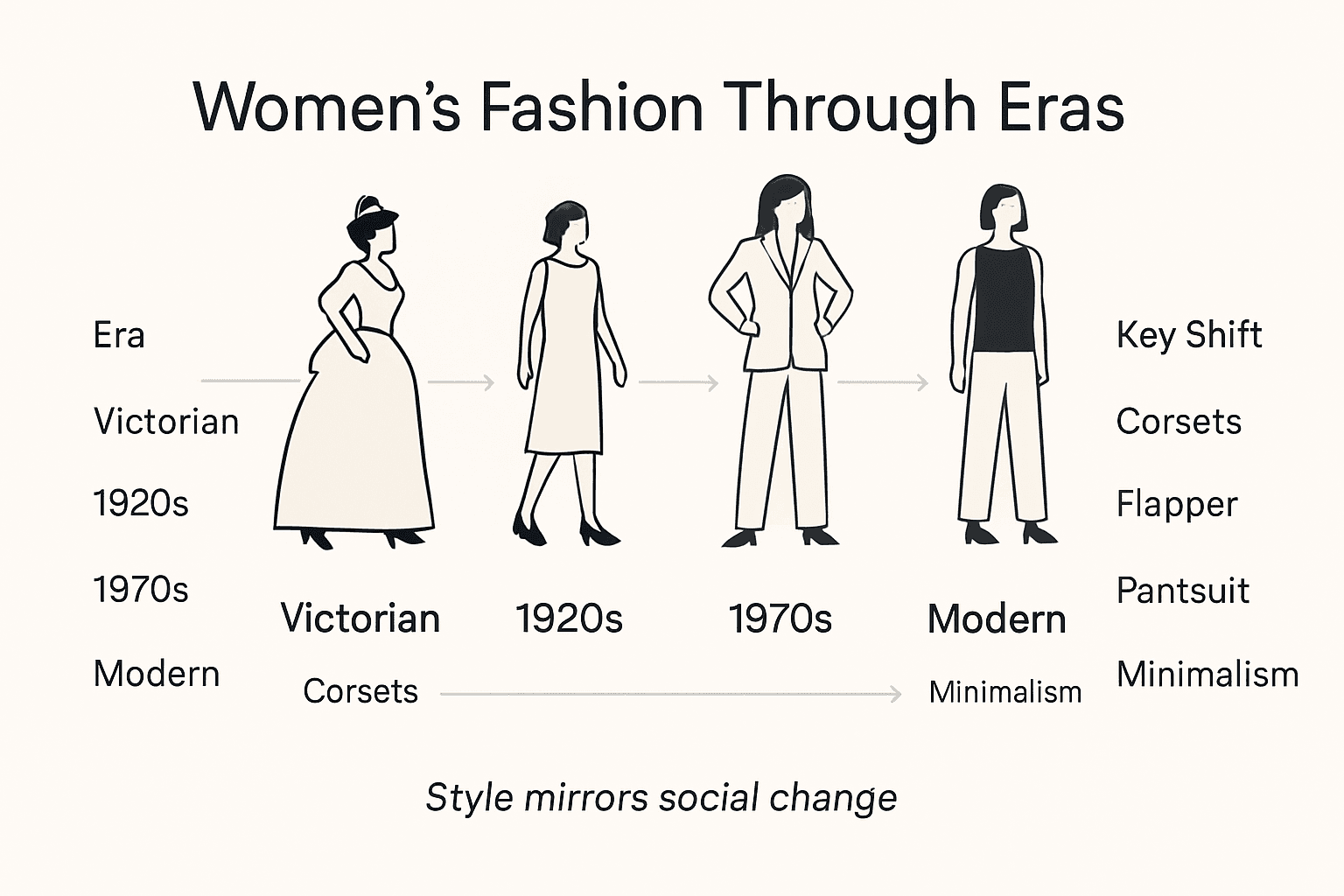
Fashion is far more than fabric draped on bodies - it’s a powerful narrative of social transformation and female autonomy. Throughout history, women’s clothing has served as a profound language of resistance, rebellion, and self-expression. From restrictive Victorian corsets to the liberating silhouettes of the 1920s, fashion history reveals women’s continuous struggle for personal freedom.
Contrary to popular belief, women’s fashion was never just about aesthetic appeal. Each garment represented a complex negotiation between societal expectations and individual agency. The tight corsets of the 19th century symbolized feminine oppression, literally constraining women’s physical movement and metaphorically representing social limitations. Conversely, the emergence of pants, shorter hemlines, and more functional clothing in the early 20th century signaled women’s growing demands for professional opportunities and personal independence.
The evolution of women’s fashion mirrors critical social movements. The flapper dresses of the 1920s weren’t merely a style trend, but a radical statement challenging traditional gender roles. Similarly, the pantsuit became a powerful uniform of professional equality during the women’s liberation movement of the 1970s. Today’s fashion continues this legacy, embracing diversity, body positivity, and individual expression through inclusive sizing, gender-neutral designs, and styles that celebrate personal identity.
Pro Tip for Fashion Freedom: Wear clothing that makes you feel powerful, comfortable, and authentically yourself - fashion is about personal narrative, not conforming to external expectations.
Here’s a summary of how key eras in women’s fashion reflect social change:
| Era | Key Fashion Shift | Societal Impact |
|---|---|---|
| Victorian Era | Corsets, hourglass silhouette | Symbolized repression and class |
| 1920s Flapper | Short hemlines, looser fits | Represented liberation and rights |
| 1950s Postwar | Full skirts, tiny waists | Promoted traditional femininity |
| 1970s Liberation | Pantsuits, minimalist designs | Asserted equality and autonomy |
| Modern Blending | Mixing vintage and new styles | Embraces identity, diversity |
Victorian Silhouettes and Social Expectations
The Victorian era represented a profound moment in fashion history where clothing became a complex instrument of social control and feminine identity. Intricate societal norms dramatically shaped women’s fashion during this period, transforming garments into powerful symbols of class, morality, and gender expectations.
The hourglass silhouette emerged as the definitive female form, achieved through extreme corseting that literally reshaped women’s bodies to conform to rigid social standards. Women were expected to compress their natural physiques into an impossibly narrow waistline, often reducing their waist measurements to as little as 16 inches through painful and restrictive undergarments. This physical manipulation was more than aesthetic - it represented a systemic method of controlling female mobility, autonomy, and self-expression.
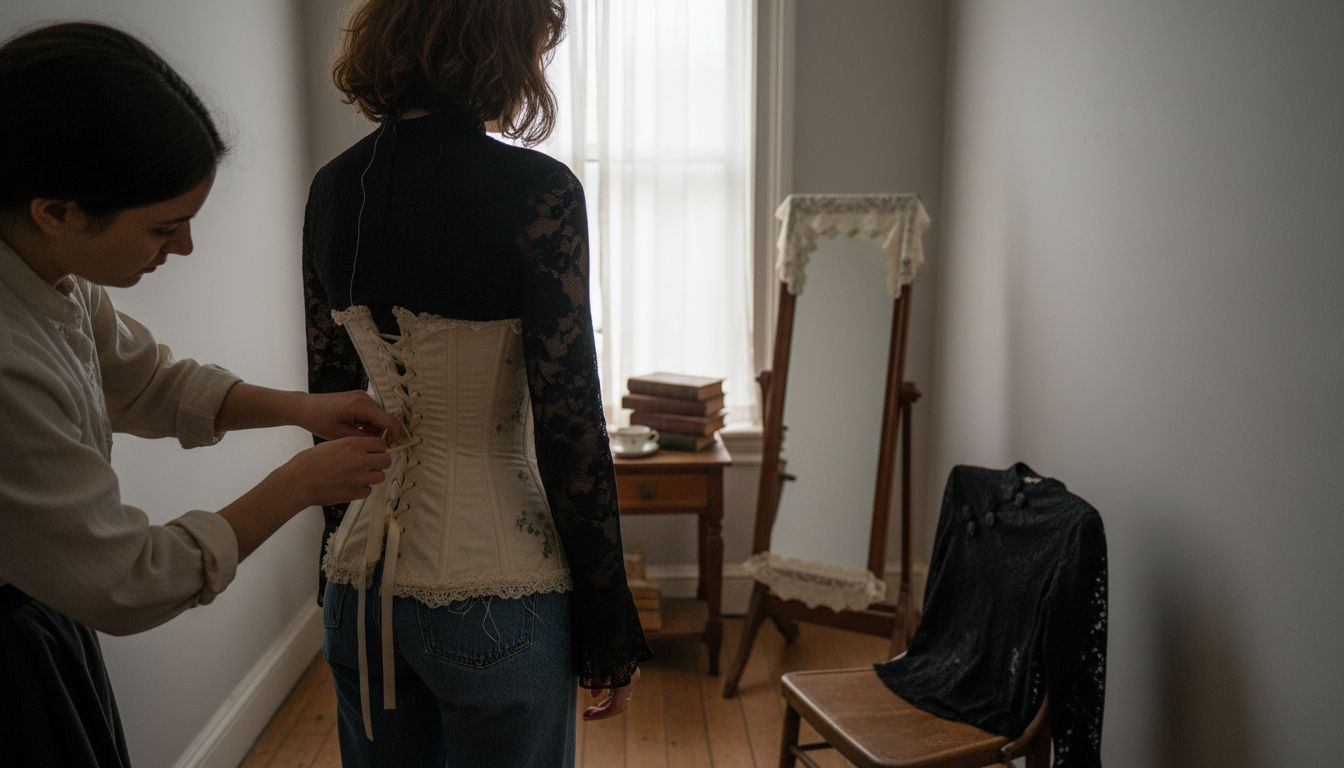
Beyond physical constraints, Victorian fashion served as a complex language of social communication. The hourglass corset became a precise mechanism for displaying social status, marital eligibility, and moral propriety. Wealthy women’s elaborate dresses with multiple layers, intricate embroideries, and restrictive structures signaled economic privilege, while simultaneously limiting their physical capabilities. The more constrictive and impractical a woman’s clothing, the more she demonstrated her social standing by showing she did not need to perform manual labor.
Pro Tip for Modern Style Reflection: Understand fashion as a form of personal narrative - your clothing choices can be an empowering expression of identity, not a constraint.
1920s Flappers to 1950s Feminine Ideals
The decades between the 1920s and 1950s represented a radical transformation in women’s fashion, reflecting profound social and cultural shifts. Women’s fashion underwent a dramatic modernization that challenged traditional gender expectations, with clothing becoming a powerful vehicle for social liberation and self-expression.
The flapper era of the 1920s marked a revolutionary moment in fashion history. Young women rejected Victorian constraints, embracing shorter hemlines, looser silhouettes, and androgynous styles that symbolized newfound personal freedom. These bold fashion choices were more than aesthetic statements - they represented women’s emerging social and economic independence. Dropped waistlines, shorter hair, and less restrictive clothing mirrored the growing assertiveness of women who had gained voting rights and were challenging traditional social roles.
The transition from the rebellious 1920s to the ultra-feminine 1950s showcased fashion’s role in reflecting broader societal transformations. World War II dramatically influenced clothing styles, with women’s fashion shifting from utilitarian wartime practicality to Christian Dior’s “New Look” in the late 1940s. This post-war style celebrated an exaggerated feminine silhouette - tiny waists, full skirts, and a return to ultra-glamorous, structured designs that contrasted sharply with the previous decades’ more functional approach.
Pro Tip for Style Evolution: Understand fashion as a dynamic reflection of social change - your wardrobe can be a powerful form of personal storytelling and self-expression.
1970s Liberation and Modern Minimalism
The 1970s marked a revolutionary moment in women’s fashion, where clothing became a powerful statement of personal freedom and social transformation. Fashion design cycles began reflecting deeper societal shifts in women’s roles and self-expression, challenging traditional gender norms through radical style choices.
The feminist movement profoundly influenced fashion during this period, with women rejecting restrictive clothing and embracing styles that symbolized personal autonomy. Pantsuits became a powerful symbol of professional equality, while bold, androgynous designs challenged traditional femininity. Designers like Diane von Furstenberg created wrap dresses that allowed women to move freely, both literally and metaphorically. The clothing of this era represented more than fashion - it was a form of social rebellion, breaking down barriers of gender expectations and professional limitations.
Fashion weeks evolved to showcase these transformative design philosophies, introducing minimalist aesthetics that would define future decades. The stark, clean lines of minimalist fashion emerged as a counterpoint to the ornate designs of previous eras, reflecting a growing desire for simplicity, functionality, and personal authenticity. This shift represented more than an aesthetic choice - it was a statement about women’s increasing confidence and desire to be seen for their capabilities rather than their decorative qualities.
Pro Tip for Modern Style Liberation: Dress as an expression of your authentic self - fashion is a powerful language of personal empowerment and individual storytelling.
Lasting Vintage Influence on Modern Wardrobes
Vintage fashion styles continue to shape contemporary wardrobes through a complex process of cultural migration and reinterpretation, demonstrating how historical design elements persistently influence modern fashion aesthetics. The cyclical nature of style means that what was once considered outdated can suddenly become cutting-edge, creating a fascinating dialogue between past and present fashion sensibilities.
The vintage revival is more than nostalgic reproduction - it represents a nuanced approach to personal style that honors historical design while reimagining those elements for contemporary contexts. Designers and fashion enthusiasts increasingly draw inspiration from different eras, creating hybrid looks that blend historical silhouettes with modern materials and construction techniques. A 1950s-inspired midi skirt might be paired with a sleek, contemporary crop top, or a vintage blazer could be styled with minimalist accessories, creating a look that feels both timeless and current.
Fashion technology and computational analysis have revealed intricate patterns of style migration and reinterpretation, showing how vintage elements continuously evolve and resurface in unexpected ways. This dynamic process allows modern wardrobes to become living archives, where clothing serves as a form of personal storytelling that transcends temporal boundaries. Designers now approach vintage influences not as mere nostalgic references, but as rich source material for innovative fashion design.
Pro Tip for Vintage Integration: Approach vintage pieces as versatile building blocks - one carefully chosen retro item can transform an entire contemporary outfit into a unique, personal statement.
Compare how select historical styles influence today’s wardrobes:
| Vintage Element | Modern Adaptation | Resulting Style Effect |
|---|---|---|
| 1950s Midi Skirt | Paired with crop tops | Timeless yet trendy silhouette |
| Victorian Corset | Worn over shirts or dresses | Structured, dramatic looks |
| 1970s Wrap Dress | Styled with sneakers or boots | Versatile, empowerment-focused |
| Flapper Beading | Incorporated in evening wear | Adds vintage glamour and detail |
Personal Reflections: Blending Eras Today
Fashion today represents a deeply personal narrative of style, where individuals curate their wardrobes by seamlessly blending elements from different historical periods, transforming clothing into a powerful form of self-expression that transcends temporal boundaries.
The art of era blending goes beyond simple vintage reproduction - it’s an intuitive dialogue between past and present. A 1970s bohemian blouse might be paired with contemporary high-waisted jeans, or a structured 1950s blazer could complement a minimalist silk slip dress. This approach allows individuals to create unique looks that reflect personal history, cultural influences, and individual aesthetic sensibilities. Each carefully selected piece becomes a statement, telling a story that is both deeply personal and universally resonant.
Modern fashion trends demonstrate how style has evolved from rigid decade-specific looks to a more fluid, adaptive approach to personal styling. Contemporary fashion enthusiasts are no longer confined by strict era-specific rules, but instead embrace a more holistic, creative approach to dressing. This freedom allows for unprecedented levels of personal creativity, where clothing becomes a dynamic form of self-storytelling that celebrates individual identity rather than conforming to prescriptive fashion norms.
Pro Tip for Style Curation: Think of your wardrobe as a personal museum - each piece should spark joy, tell a story, and reflect a moment in your personal fashion journey.
Embrace Your Style as a Statement of Freedom and Empowerment
Fashion has always been a language of personal expression and social change. If you have ever felt restricted by conventional fashion expectations or struggled to find pieces that truly represent your unique journey, you are not alone. The article highlights how women’s clothing historically symbolized both oppression and liberation, reminding us that your wardrobe should empower you rather than confine you.
Discover how you can reclaim your narrative today with our curated Corsets / Bustiers that blend vintage elegance with modern freedom or explore fresh arrivals in our New In collection designed for authentic self-expression.
Step into a world where fashion celebrates your identity, comfort, and confidence. Visit Be Juliet now and start building a wardrobe that tells your story of love, strength, and change with every piece. Don’t wait to express yourself fully—your empowered style awaits.
Frequently Asked Questions
What is the significance of women’s fashion throughout history?
Fashion has served as a powerful narrative tool that reflects women’s struggle for autonomy and social transformation. Each era of women’s clothing has represented varying degrees of resistance against societal norms and expectations.
How did Victorian fashion symbolize female oppression?
Victorian fashion, particularly the use of corsets to create an hourglass silhouette, physically constrained women and represented a societal expectation to limit their mobility and self-expression, symbolizing broader social limitations on women’s freedoms.
What role did the 1920s flapper style play in women’s rights?
The flapper style of the 1920s marked a revolutionary moment in women’s fashion, characterized by shorter hemlines and looser silhouettes. It signified women’s newfound social and economic independence, challenging traditional gender roles and expectations.
How has modern fashion continued the legacy of women’s liberation?
Today’s fashion embraces diversity, body positivity, and individual expression through inclusive sizing and gender-neutral designs, continuing the legacy of previous movements that advocated for women’s equality and style freedom.