
Importance of Dressing for Joy: Fashion That Uplifts
Morning routines can feel rushed when juggling busy schedules, but choosing what to wear should never be a chore. Dressing is more than a ritual of putting on clothes—research highlights that it is a powerful tool for self-expression and emotional connection, helping women reflect their inner world to the outside. This guide uncovers how embracing dressing for joy becomes an act of self-care, offering practical ways to infuse positive energy and confidence into every outfit so style matches mood and ambition.
Table of Contents
- Dressing for Joy Defined and Debunked
- How Clothes Influence Mood and Energy
- Intuitive Style: Trusting Your Inner Muse
- Choosing Colors, Textures, and Silhouettes That Delight
- Joyful Fashion as Everyday Self-Care
- Personal Story: My Mood-Boosting Outfit Ritual
Key Takeaways
| Point | Details |
|---|---|
| Emotional Expression Through Fashion | Dressing for joy emphasizes self-expression, allowing individuals to communicate their emotions through clothing choices. |
| Psychological Impact of Clothing | Clothing influences mood and confidence, with elements like color and texture playing key roles in emotional well-being. |
| Intuitive Personal Style | Trusting one’s inner muse allows for a unique wardrobe that prioritizes personal comfort and emotional resonance over societal trends. |
| Fashion as Self-Care | Intentional clothing selections can serve as daily self-care rituals, transforming dressing into an act of personal affirmation and emotional nourishment. |
Dressing for Joy Defined and Debunked
Beyond simple fabric and silhouettes, dressing for joy is a profound form of self-expression that transcends traditional fashion rules. At its core, joy-driven fashion is about wearing clothes that reflect your inner emotional landscape, creating a personal narrative through style choices.
Research reveals fascinating insights into how clothing functions far beyond aesthetic utility. Dress as psychological expression demonstrates that our wardrobe serves as a complex communication tool, helping us negotiate personal and social identities. When we select pieces that genuinely spark happiness, we’re engaging in a nuanced form of emotional communication.
What does dressing for joy actually look like? It’s deeply personal and varies for everyone, but some universal principles emerge:
- Choose colors that energize you
- Select textures that feel comforting
- Prioritize pieces that make you feel authentically yourself
- Experiment with styles that boost your confidence
- Ignore restrictive fashion “rules” that diminish your spirit
Psychological research suggests that clothing shapes social perceptions, highlighting how our fashion choices aren’t just aesthetic decisions but powerful statements about our internal world. By intentionally selecting clothing that resonates with our emotional state, we transform fashion from a passive experience into an active form of self-care.
Pro Tip: Keep a “joy journal” where you document outfits that make you feel most confident and why, creating a personal style blueprint that celebrates your unique emotional landscape.
How Clothes Influence Mood and Energy
Clothing is far more than a mere external covering — it’s a powerful psychological tool that can dramatically transform our emotional state and personal energy. Psychological effects of clothing reveal that what we wear has profound implications for our mood, confidence, and overall behavior.
The concept of enclothed cognition suggests that clothing carries deep symbolic meanings that directly influence our cognitive and emotional experiences. Clothing’s symbolic meanings demonstrate how garments can shape our thoughts, feelings, and actions in subtle yet significant ways.
Specifically, clothing impacts mood through several key mechanisms:
- Color psychology: Bright colors can energize, while soft tones can calm
- Fit and comfort: Well-fitted clothing boosts confidence
- Texture sensations: Soft fabrics can provide emotional comfort
- Personal symbolism: Clothes connected to positive memories uplift mood
- Professional attire: Certain outfits can make us feel more competent and powerful
These psychological connections mean that intentional wardrobe choices can be a form of emotional self-care. By understanding how different clothing elements interact with our mental state, we can curate a wardrobe that actively supports our emotional well-being.
Here’s a summary of how clothing elements can influence emotional well-being:
| Clothing Element | Impact on Mood | Typical Examples |
|---|---|---|
| Color | Energizes or calms | Bright yellows, soft blues |
| Texture | Provides comfort | Silk, cotton, fleece |
| Silhouette | Boosts self-confidence | Fitted blazers, flowy dresses |
| Symbolism | Inspires positivity | Sentimental jewelry, favorite shirts |
Pro Tip: Create a “mood-boosting” section in your closet with outfits that make you feel confident, powerful, and authentically yourself.
Intuitive Style: Trusting Your Inner Muse
Personal style is a profound form of self-expression that transcends external trends and societal expectations. Dressing as personal ritual reveals that clothing choices are deeply intimate moments of self-care and creativity, inviting us to listen to our internal emotional landscape.
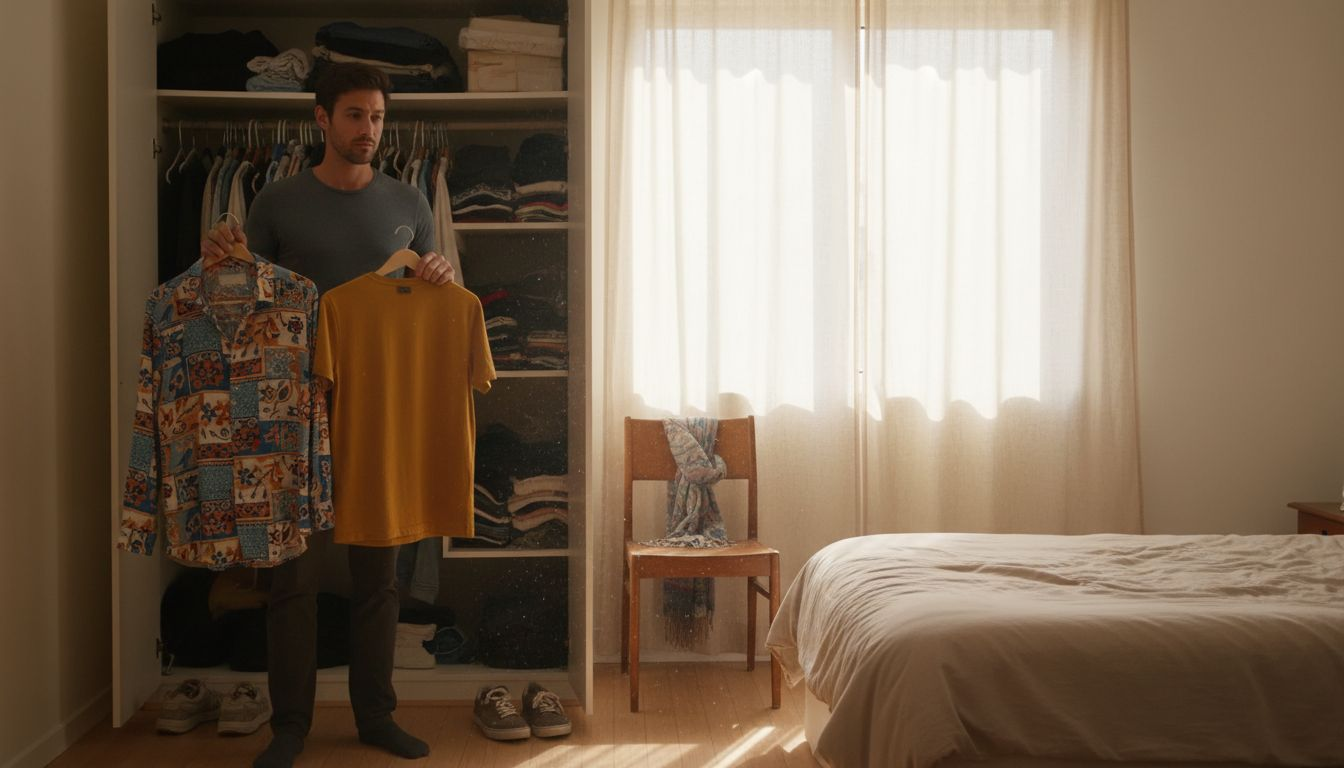
Trusting your inner muse means rejecting prescriptive fashion rules and embracing a more intuitive approach to personal style. Personal agency in fashion choices demonstrates how individual empowerment emerges when we curate wardrobes that authentically reflect our unique identity.
Key strategies for connecting with your intuitive style include:
- Reflect on clothes that make you feel most confident
- Ignore trends that don’t resonate with your personal energy
- Experiment with unexpected color and texture combinations
- Pay attention to how clothing makes you feel, not just how it looks
- Trust your emotional response when trying on new pieces
Intuitive styling is about creating a wardrobe that feels like a second skin — comfortable, expressive, and uniquely you. It’s less about following fashion dictates and more about cultivating a deep, personal dialogue with your clothing.
Compare intuitive style with traditional fashion approaches:
| Approach | Focus | Decision Process | Emotional Outcome |
|---|---|---|---|
| Intuitive Style | Personal expression | Emotional response-driven | Uplifted, authentic feelings |
| Traditional Fashion | Trend and societal norms | Rule or trend-based selection | May feel restricted or neutral |
Pro Tip: Create a mood board that captures your authentic style essence, using images that spark joy and reflect your true inner self.
Choosing Colors, Textures, and Silhouettes That Delight
Dopamine dressing transforms fashion from a mere aesthetic choice into a powerful emotional strategy. Dress with joyful colors explores how intentional clothing selections can dramatically elevate mood and personal energy, turning your wardrobe into a tool for emotional well-being.
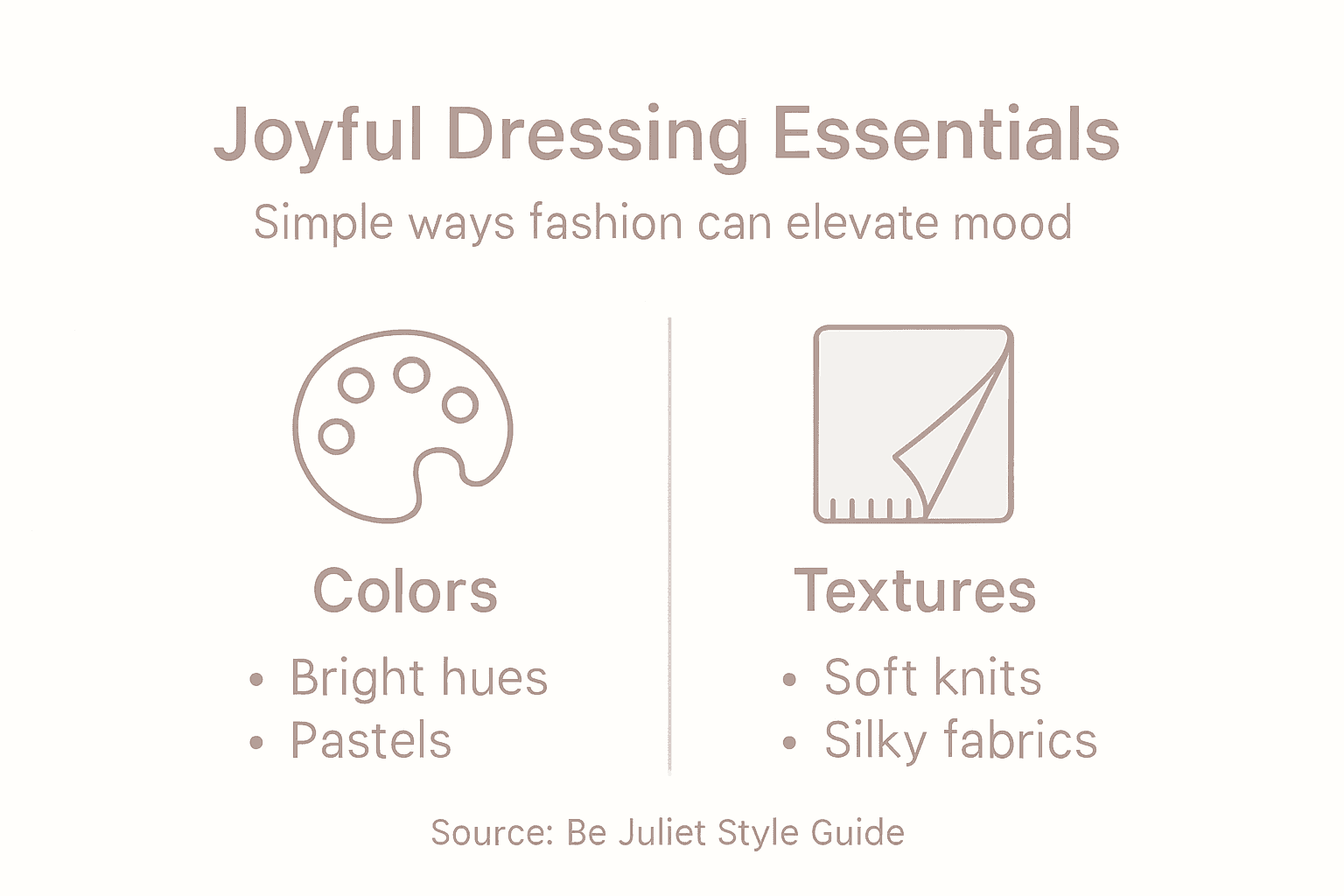
Choosing delightful clothing is an art form that goes beyond trends, focusing instead on personal resonance and emotional authenticity. Bold prints and bright textures reveal how specific fashion elements can cultivate happiness and personal vibrancy, making each outfit a statement of inner joy.
Key principles for choosing colors, textures, and silhouettes that spark genuine delight include:
- Select colors that make you feel energized and confident
- Experiment with textures that provide sensory comfort
- Choose silhouettes that celebrate your unique body shape
- Mix unexpected color combinations that bring spontaneous smiles
- Prioritize clothing that feels like a second skin
The magic of joyful dressing lies in understanding that fashion is deeply personal. It’s about creating a visual and tactile experience that resonates with your inner emotional landscape, transforming getting dressed from a routine task into a daily celebration of self.
Pro Tip: Create a “joy palette” in your closet by collecting pieces that instantly lift your mood, using color, texture, and fit as your guiding principles.
Joyful Fashion as Everyday Self-Care
Self-care isn’t just about meditation and bubble baths — it’s also about how we dress and present ourselves to the world. Dressing as self-care ritual reveals that our daily clothing choices can be a profound act of emotional nurturing and personal affirmation.
Fashion becomes a powerful form of self-care when we intentionally select pieces that reflect our inner emotional landscape. Mindful fashion choices demonstrate how clothing can serve as a daily mental health intervention, lifting spirits and reinforcing personal identity.
Key strategies for transforming fashion into everyday self-care include:
- Choose clothing that makes you feel confident and authentic
- Use color as an emotional tool for mood regulation
- Create a wardrobe that feels like a personal sanctuary
- Dress for comfort and emotional resonance, not just external validation
- Celebrate your body through clothing that feels genuinely good
Understanding fashion as self-care means recognizing that getting dressed is more than a mundane task — it’s an opportunity for daily emotional nourishment, a moment of connection with yourself, and a creative expression of inner joy.
Pro Tip: Develop a morning ritual where dressing becomes a mindful practice of self-love, taking time to select pieces that genuinely spark happiness.
Personal Story: My Mood-Boosting Outfit Ritual
Every morning, my outfit becomes a carefully curated emotional armor. Personal dressing rituals reveal how clothing choices are deeply personal expressions of our inner emotional landscape, transforming getting dressed from a mundane task into a powerful act of self-care.
My mood-boosting outfit always starts with a vibrant statement piece — typically a silk scarf in electric blue or a blazer with unexpected texture. Creating consistent mood elevation demonstrates that intentional style choices can systematically improve emotional well-being and personal confidence.
My personal mood-boosting outfit ritual involves several key elements:
- Select one bold, confidence-triggering piece as a focal point
- Layer with soft, comforting textures that feel like a gentle hug
- Choose colors that resonate with my current emotional state
- Incorporate accessories that hold personal meaning
- Ensure the entire ensemble feels authentically ‘me’
These carefully selected pieces aren’t just clothing — they’re emotional tools that help me navigate complex days with grace, creativity, and an unwavering sense of self. My outfit becomes a form of non-verbal communication, expressing my inner strength and resilience before I even speak a word.
Pro Tip: Create a dedicated ‘joy section’ in your closet with pieces that instantly lift your mood, making morning dressing a celebration of self-expression.
Elevate Your Mood with Fashion That Speaks to Your Soul
The article highlights a common challenge: finding clothing that genuinely uplifts your spirit and reflects your authentic self. Dressing for joy means embracing pieces that boost your confidence, provide comfort, and resonate deeply with your emotions. At Be Juliet, we understand this journey and celebrate the power of fashion as a form of everyday self-care.
Discover our carefully curated collections like Sweaters & Sweatshirts designed to envelop you in comfort while reflecting your unique style. Whether you are seeking bold statement pieces or cozy essentials, each garment is created to help you express joy and empowerment effortlessly.
Experience the magic of clothing that transforms your mood. Visit Be Juliet today and start your journey toward a wardrobe that truly uplifts and inspires. Explore our New In collection and find the perfect pieces that speak your style and soul.
Frequently Asked Questions
What is dressing for joy?
Dressing for joy is a form of self-expression that involves choosing clothes based on the emotions they evoke, creating a personal narrative through fashion choices that reflect one’s inner feelings.
How can clothing impact my mood and energy levels?
Clothing can significantly influence mood through elements like color, fit, and texture. Bright colors can energize, while soft fabrics can provide comfort; well-fitted clothing boosts confidence, and personal symbolism can uplift your spirits.
What are some tips for selecting joy-inducing clothing?
Choose colors that energize you, select textures that feel comforting, prioritize pieces that reflect your true self, experiment with styles that enhance your confidence, and ignore restrictive fashion rules that make you feel less expressive.
Can personal style be intuitive, and how can I embrace it?
Yes, personal style can be intuitive. Embrace it by reflecting on what makes you feel confident, ignoring trends that don’t resonate, and paying attention to your emotional responses when trying on different pieces.
Recommended
- How Fashion Impacts Mood: Style as Self-Care – Be Juliet
- Fashion and Mental Health: How Your Style Impacts Your Wellbeing – Be Juliet
- Why Fashion Matters – Self-Expression, Identity, and Power – Be Juliet
- Wellness and Fashion – How Clothing Elevates Mood – Be Juliet
- Rectangular Body Type Dress & Best Dresses for Pear Shaped Bodies 3