
Finding Fashion Inspiration: Expressing Love and Identity
Many women find themselves caught between wanting to express their unique style and feeling pressure to keep up with every trend. Fashion is much more than copying looks from social media; it is a dynamic expression of personality and cultural identity shaped by both personal values and the world around you. This guide helps you see fashion inspiration as a tool for authentic self-expression, debunking common misconceptions and showing you how to build a wardrobe rooted in meaning, comfort, and elegance.
Table of Contents
- Fashion Inspiration Defined And Misconceptions
- Sources Of Inspiration: Art, Music, And Life
- Distinct Style Types And Their Key Features
- Creative Process For Curating Your Wardrobe
- Embracing Individuality While Staying Relevant
- Mistakes To Avoid On Your Style Journey
Key Takeaways
| Point | Details |
|---|---|
| Understanding Fashion Inspiration | Real fashion inspiration involves personal expression and cultural identity, not just imitating trends. Curate styles that resonate with your values and lifestyle. |
| Sources of Inspiration | Inspiration can be drawn from everyday experiences, art, and music, enriching your wardrobe with meaning and storytelling. |
| Fashion vs. Personal Style | Recognize the difference between fashion trends and your personal style; evolve your look while staying authentic to yourself. |
| Common Style Mistakes | Avoid buying ill-fitting clothes and following trends blindly; focus on what serves your body and lifestyle for a more effective wardrobe. |
Fashion Inspiration Defined and Misconceptions
Let’s get real about what fashion inspiration actually is, because a lot of people get this wrong. Fashion inspiration isn’t just scrolling through Instagram and copying someone else’s outfit. It’s deeper than that. Fashion as an aesthetic and social expression represents your personality and cultural identity, meaning it’s actually a tool for communicating who you are to the world. Real fashion inspiration comes from understanding how to take ideas, aesthetics, and styles that resonate with you, then filter them through your own values, body, lifestyle, and story. It’s about finding pieces and combinations that make you feel like yourself, not like a carbon copy of someone else.
Here’s where the misconceptions get messy. Many people think fashion inspiration means following trends blindly. That you have to wear what celebrities wear or what’s trending on TikTok to be fashionable. Wrong. Others believe inspiration has to be complicated or expensive—that you need a stylist or a massive budget to pull together looks that matter. Also not true. The biggest misconception of all? That fashion inspiration is superficial. People often dismiss fashion as shallow or frivolous, when really it’s a form of self-expression and cultural communication. When you choose what to wear, you’re making a statement about how you see yourself and how you want to move through the world. Understanding fashion’s role in communicating personality reveals that inspiration is actually about intentionality and authenticity, not vanity.
So what does real fashion inspiration look like? It’s personal. It comes from paying attention to how you feel in certain pieces, what colors make you confident, what silhouettes make you move differently. It comes from recognizing patterns in what you’re drawn to, whether that’s a color palette, a fabric texture, or a certain vibe. It can come from art, nature, your grandmother’s closet, a movie character, or the way someone styled an outfit at the coffee shop. The point is that you’re curating inspiration that speaks to your identity and values, not just copying what’s popular. The difference between fashion and style matters here too—fashion is the industry and trends, but your style is how you interpret and express those trends through your authentic lens. When you understand that distinction, finding inspiration becomes less about chasing trends and more about discovering what makes you feel like the best version of yourself.
Pro tip: Create an inspiration board (physical or digital) with images, colors, and styles that genuinely excite you, then look for the common threads—you’ll discover what actually inspires you versus what you think should inspire you.
Sources of Inspiration: Art, Music, and Life
Where does your fashion inspiration actually live? It’s not in some exclusive designer studio or behind a velvet rope. Your most powerful inspiration sources are everywhere around you, waiting to be noticed. Art, music, and life itself are the holy trinity of fashion creativity, and they work together in ways that feel almost magical once you start paying attention. Think about the last time a painting made you pause. Or how a song shifted your entire mood. Those moments aren’t just aesthetic experiences—they’re actually design briefs waiting to happen. When you understand how art influences fashion design, you start seeing your favorite artworks as color palettes, texture studies, and compositional blueprints for your own wardrobe.
Art is probably the most obvious starting point, but most people don’t use it intentionally. Painters, sculptors, and installation artists have already done the hard work of exploring color combinations, texture contrasts, and visual storytelling. A Rothko painting with its bleeding colors and emotional depth can teach you more about color harmony than any style guide. The sharp lines and bold geometry of a Mondrian piece translate directly into outfit structures. Textile artists show you how patterns interact with form. Then there’s music, which works on your wardrobe in a completely different way. Musicians influence fashion through their visual presentation, but also through the emotional energy and attitude they embody. A punk rock album cover isn’t just a visual—it’s an entire philosophy about how to dress, move, and exist. Jazz teaches you about improvisation and layering. Classical music speaks to structure and elegance. Hip-hop celebrates bold self-expression and cultural identity. When you listen with intention, you’re absorbing inspiration that goes way deeper than just liking how someone looks.
But here’s what makes this real and personal: life itself is your most important source. The way light hits your kitchen window in the morning. How your best friend styled her hair last week. The colors in your neighborhood during fall. A conversation that shifted your perspective. A breakup that made you want to dress differently. Your heritage, your family stories, the places you’ve traveled, the people who matter to you—all of these are design briefs. The magic happens when you synthesize all three. You see a Caravaggio painting, it reminds you of a Kendrick Lamar lyric, which connects to a memory from your childhood, and suddenly you understand exactly what outfit you need to create to express that feeling. That’s when fashion stops being about clothes and becomes about storytelling. That’s when inspiration becomes identity.
Pro tip: Visit an art museum or gallery without your phone and spend 20 minutes with one piece that stops you—note the colors, textures, and feeling it creates, then intentionally wear something inspired by it within the week.
Distinct Style Types and Their Key Features
Here’s the thing about style categories: they’re not boxes you climb into and stay in forever. They’re more like dialects you learn to speak, and most of us end up mixing several together. Understanding distinct style types helps you recognize what resonates with you and what doesn’t. Different fashion styles express identity through silhouettes, color palettes, and cultural influences, which means knowing these categories gives you language to describe what you’re actually drawn to. Think of classic style, which centers on timeless pieces, neutral colors, and clean lines. It’s structured, intentional, and deliberately avoids trends. Then there’s casual style, which prioritizes comfort and ease without sacrificing polish. Casual is your jeans, your oversized linen shirts, your sneakers paired with everything. Bohemian style celebrates flowing fabrics, earthy tones, vintage finds, and cultural textiles. It’s romantic and free-spirited. Streetwear brings an urban edge with graphic tees, oversized silhouettes, sneakers, and attitude. Each style tells a different story about how you move through the world.
But here’s where it gets interesting: most women don’t fit neatly into one category. You might love the structure of classic style but crave the freedom of bohemian pieces. You might dress casually every day but add streetwear elements when you want attitude. The real power comes from understanding how to identify your personal style and then borrowing from multiple aesthetics to create something that feels authentically you. Romantic style emphasizes softness, florals, and femininity. Minimalist style strips everything down to essential pieces in neutral tones. Preppy style channels organized elegance with crisp tailoring and structured silhouettes. Edgy style incorporates leather, dark colors, and bold accessories. Artistic style celebrates color, texture, and unconventional pieces. Academic style borrows from vintage schoolwear with blazers, pleated skirts, and preppy foundations. Vintage style pulls from specific decades, each with its own visual language. Grunge brings intentional dishevelment, oversized fits, and worn textures. Maximalist style is the opposite of minimalist, celebrating color, pattern, and abundance.
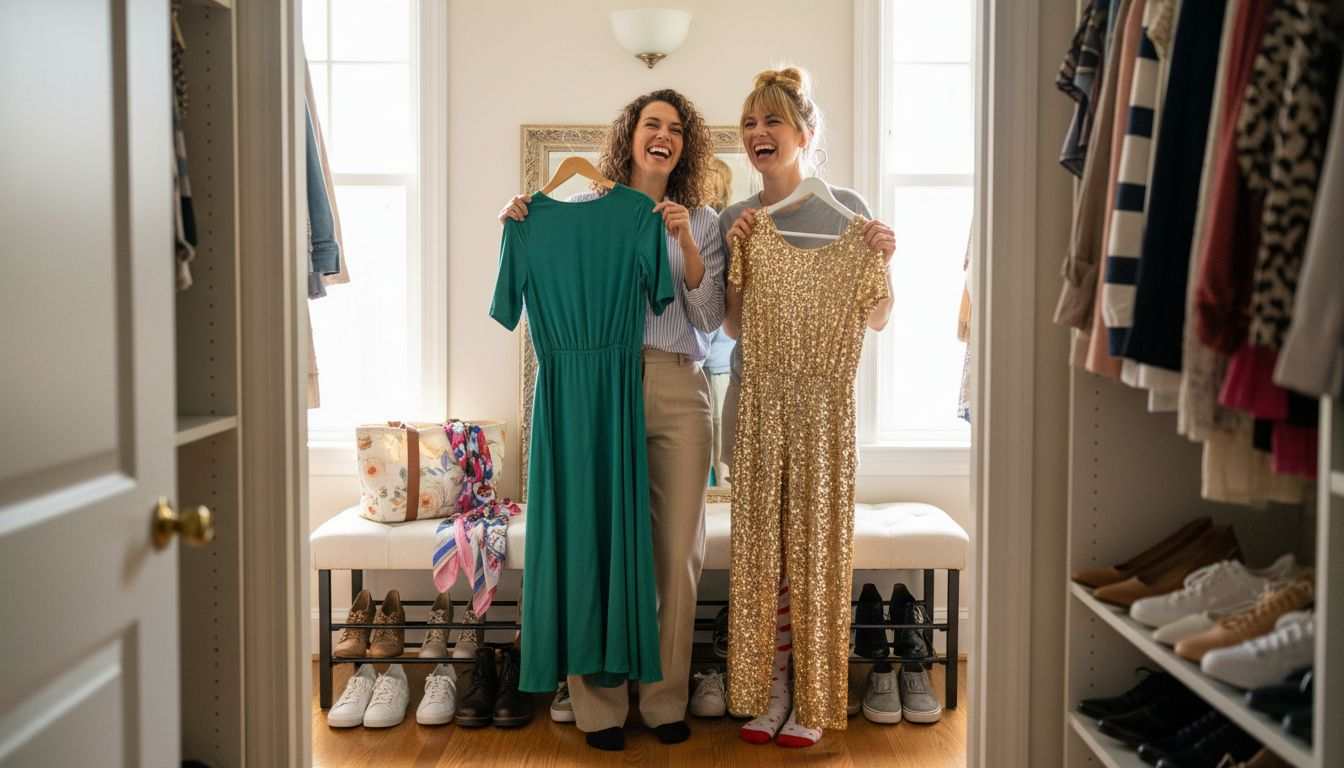
What matters most is recognizing the core features that define each style and then deciding which ones speak to your identity and lifestyle. Are you someone who feels confident in structure and polish? Classic elements might be your foundation. Do you need ease and comfort above all? Casual and minimalist might feel freeing. Are you expressing a rebellious side? Edgy or streetwear elements could be your voice. Are you honoring your heritage or spiritual side? Bohemian and artistic styles invite that. The beauty of understanding style types is that you get to curate your own blend. You’re not locked into one identity. Your style can be romantic one season and edgy the next. It can celebrate femininity while also incorporating streetwear. It can honor minimalism while occasionally going maximalist. What distinguishes a personal signature look is consistency in how you mix these elements, not rigidity in sticking to one category. Your style should feel like freedom, not a costume.
Pro tip: Spend a week noting which style names keep coming up when you describe outfits you love, then pick three styles that resonate most and create a small inspiration board for each to identify their shared colors, textures, and silhouettes.
Here is a quick comparison of popular style types and what makes each one unique:
| Style Type | Defining Colors | Typical Silhouettes | Key Influences |
|---|---|---|---|
| Classic | Neutrals, navy, camel | Tailored, structured | Timeless icons, tradition |
| Casual | Blue, white, earth tones | Relaxed, loose, simple | Sport, comfort, easygoing |
| Bohemian | Earth, jewel, muted | Flowing, layered, eclectic | Art, travel, vintage |
| Streetwear | Black, bold, mixed | Oversized, sporty, graphic | Urban culture, music |
| Minimalist | Monochrome, muted | Clean, straight, basic | Scandinavian, modern art |
| Romantic | Pastels, florals, blush | Soft, feminine, draped | Vintage, nature, softness |
| Edgy | Black, deep tones | Fitted, leather, asymmetry | Punk, rebellion, attitude |
Creative Process for Curating Your Wardrobe
Curating a wardrobe that actually works isn’t about buying more stuff. It’s about intention. Real curation starts with honest self-reflection. Who are you on a Tuesday morning when no one’s watching? What makes you feel powerful? What do you reach for when you’re tired or sad or celebrating? These questions matter more than any trend report. The wardrobe curation process begins with assessing your current clothing and defining a personal color palette that genuinely complements your skin tone and makes you happy. Then comes the hard part: being honest about what actually works. Pull everything out. Try things on. Notice what you gravitate toward and what’s been sitting unworn. Notice which pieces make you feel like yourself and which ones feel like you’re playing a character. The pieces that make you feel alive are your compass. They’re telling you something about your true style that nothing else can.
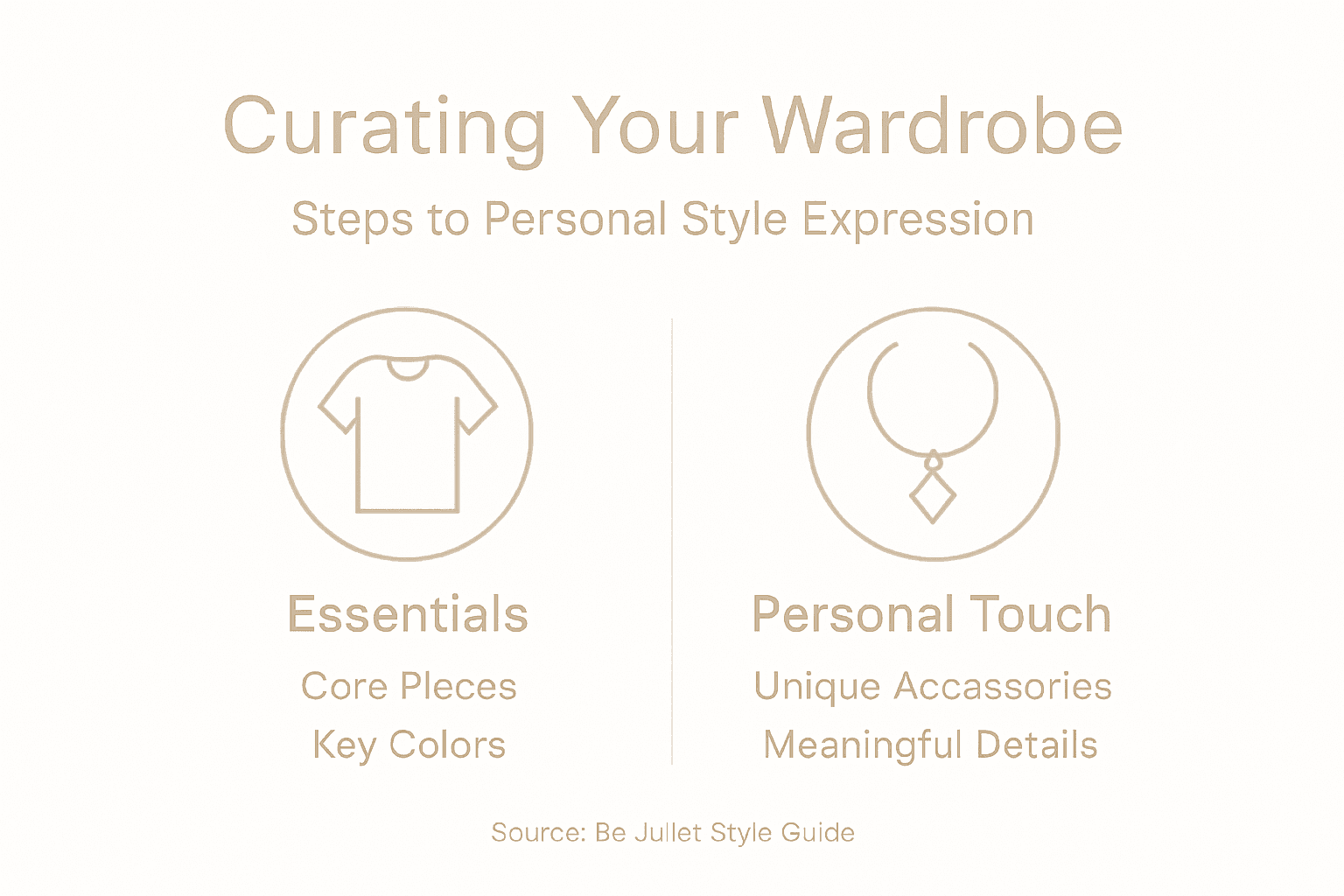
Next, think about your lifestyle and how you actually spend your time. If you work in an office, you need different pieces than someone who works from home. If you have kids, you need functionality. If you go out dancing every weekend, you need something different than someone whose social life is coffee dates. Your wardrobe should serve your life, not some imaginary life you think you should be living. Building a cohesive collection requires investing in versatile, high-quality pieces that work together across multiple outfits. This is where capsule thinking becomes your best friend. You’re not aiming for quantity. You’re aiming for pieces that work together, that transition across seasons, that make getting dressed feel like a creative process instead of a source of stress. Quality matters here because pieces need to last and perform. A beautiful silk slip dress works in summer, layered under sweaters in fall, dressed up for date night, dressed down with sneakers on Saturday. That’s the math of good curation.
The emotional dimension matters too. Your wardrobe should tell the story of who you are and who you’re becoming. If you love music, maybe that shows up in graphic tees or statement pieces. If you value sustainability, maybe it shows up in vintage finds and investment pieces you’ll wear for years. If you’re honoring your heritage, maybe that shows up in fabrics, colors, or silhouettes that connect you to your culture. The most curated wardrobes aren’t the most expensive ones or the ones with the most pieces. They’re the ones where every single item has a reason to exist. Every piece either makes you feel beautiful, works hard for you, or carries meaning. That’s the difference between having a closet full of clothes and having a wardrobe that actually supports your life and identity.
Pro tip: Start with five core neutral pieces (think well-fitting jeans, a white tee, a blazer, a sweater, and a pair of shoes), then add pieces gradually based on what feels missing when you try to create outfits, rather than buying randomly and hoping things work together.
Embracing Individuality While Staying Relevant
Here’s the tension that keeps a lot of women stuck: you want to be yourself, but you also don’t want to look completely out of touch. It feels like you have to choose between authenticity and relevance, between standing out and fitting in. The good news? That’s a false choice. Fashion serves as a dynamic interplay between personal identity and contemporary influences in a globalized world, which means you can absolutely honor who you are while staying engaged with what’s happening around you. The trick is understanding the difference between trends and timelessness, between chasing every new thing and building a personal aesthetic that evolves naturally. Real relevance doesn’t mean copying what’s trending on Instagram. It means staying connected to your own values, your community, and the cultural moment you’re in, then expressing that through your personal style. Someone with a distinct style always looks current because they’re authentically engaged with their life.
Think about the women whose style you actually admire. The ones you notice not because they’re wearing the most expensive brands, but because something about how they put themselves together feels intentional and alive. They’re not following a formula. They’re not trying to look like anyone else. But they’re also not frozen in time wearing the same silhouette they wore ten years ago. What they’re doing is taking pieces of what resonates with them from the world around them and filtering it through their own aesthetic lens. Maybe that means incorporating a trending color into a classic silhouette you already love. Maybe it means taking a contemporary cut and pairing it with vintage pieces. Maybe it means staying true to your signature style while letting your personal evolution show through in smaller ways. Your style should grow with you, not stay static. The goal is expressing your true self through authentic clothing choices while remaining socially engaged in the fashion conversation.
What grounds you in relevance is actually paying attention. Reading. Watching. Listening. Understanding what’s happening culturally and what that means to you personally. If a trend speaks to your values or your aesthetic, take it. If it doesn’t, leave it. You’re not obligated to wear something just because it’s having a moment. But you are responsible for staying curious about the world and letting that curiosity inform your choices. The women who look most stylish and relevant are the ones who have strong personal aesthetics but enough flexibility to let them breathe and grow. They know their non-negotiables (the colors, silhouettes, and vibes that make them feel like themselves), and then they play within those boundaries. They know their heritage and their values. They know what makes them feel confident. And they stay connected to the present moment without losing themselves in it. That balance is what makes someone look like themselves, but also like someone who’s alive right now, in this moment, in this world.
Pro tip: Before adopting a trend, ask yourself three questions: Does this align with my personal aesthetic? Does this serve my lifestyle? Do I genuinely love this, or do I think I should love it? If you answer yes to at least two, it’s worth trying; if not, keep walking.
Mistakes to Avoid on Your Style Journey
Every woman makes fashion mistakes. That’s not failure. That’s learning. But some mistakes derail your style journey faster than others, and knowing what to watch out for can save you time, money, and a lot of outfit regret. The biggest mistake most people make is buying clothes that don’t fit properly. And I don’t just mean size. I mean fit. A piece can be the right size but still pull across your chest, gap at the waist, or create weird bunching at the hips. Ill-fitting clothes are one of the most common style mistakes that can be fixed through proper tailoring and understanding your actual measurements. Your body is unique. Your clothes should be tailored to you, not the other way around. If something costs fifty dollars and you don’t wear it because it doesn’t fit right, that’s fifty dollars wasted. If you invest in tailoring for a hundred-dollar piece you actually wear, that’s money well spent. Get things hemmed. Get waistbands taken in. Get sleeves shortened. This is not indulgent. This is basic style hygiene.
The second major mistake is chasing trends that don’t serve your body or your lifestyle. You see something on TikTok, you buy it, you get home, and you realize it doesn’t work for you at all. Maybe the cut doesn’t flatter your frame. Maybe the trend contradicts your personal aesthetic. Maybe it requires styling you’ll never actually do. Trends are fun to play with, but they should be additions to your existing style, not replacements for it. You’re also likely over-accessorizing or under-coordinating your colors. Too many statement pieces in one outfit reads chaotic. Too many clashing colors reads confused. Too many accessories competes for attention. And too little coordination makes everything feel disconnected. The goal is balance. One statement piece per outfit usually works. Colors should either harmonize or intentionally contrast in a way that feels deliberate, not accidental. You’re also probably not paying attention to proportion. If you wear oversized on top, balance it with fitted on the bottom. If you wear fitted on top, you can go looser on the bottom. Playing with proportion intentionally creates visual interest. Ignoring it just looks sloppy.
Another critical mistake is comparing your real life to other people’s Instagram feeds. You’ll never build an authentic style if you’re constantly measuring yourself against curated, filtered images. Comparison is a style killer. Focus on what works for your body, your budget, your lifestyle, and your values. Stop buying things because they look good on someone else. You’re not someone else. Your style should make sense for you. One more thing: don’t hold onto pieces out of guilt. That expensive jacket you never wear? The dress you bought for an event that already happened? The trends you thought you had to have? Let them go. Holding onto clothes that don’t serve you wastes mental space and closet space. Every piece in your wardrobe should either make you feel beautiful, work hard for you, or bring you genuine joy. If it doesn’t do at least one of those things, it’s taking up real estate.
Pro tip: Before buying anything new, try it on and actually move in it, sit in it, and check your reflection from behind; if you have any doubt about fit or how you feel in it, don’t buy it, no matter how much you love it in theory.
The table below summarizes common fashion mistakes and their practical solutions:
| Style Mistake | Why It Happens | How to Avoid It |
|---|---|---|
| Wearing ill-fitting clothes | Ignoring proportions, guessing | Get accurate measurements, tailor fits |
| Blindly following trends | Social media influence | Align trends with your values |
| Over-accessorizing | Adding too many statement pieces | Limit to one highlight accessory |
| Holding onto unworn pieces | Guilt or sunk cost fallacy | Donate or resell what doesn’t serve you |
| Comparing to others | Social media pressure | Focus on your unique lifestyle and fit |
Discover Your Unique Style Story with Be Juliet
Struggling to find fashion inspiration that truly reflects who you are instead of just following fleeting trends is a challenge many face. This article highlights how real style is about expressing your identity, embracing your personal narrative, and wearing what makes you feel authentic and confident every day. At Be Juliet, we celebrate this deeply personal journey with collections designed to empower you to curate a wardrobe that speaks your truth. Whether you seek the perfect Corset or Bustier that embodies bold self-expression or crave the comfort and ease of our Sweaters & Sweatshirts for those laid-back moments, we have pieces crafted to honor every facet of your style and life.
Start your path to authentic style today by exploring our latest arrivals in New In. Be Juliet is more than clothes—it is a celebration of love and individuality woven into every stitch, empowering you to express yourself fully. Embrace a wardrobe that evolves with you and captures the essence of who you are. Visit Be Juliet now to begin creating your one-of-a-kind style story.
Frequently Asked Questions
What is fashion inspiration?
Fashion inspiration is a deeper understanding of how ideas, aesthetics, and styles resonate with your personal identity, cultural background, and values. It involves curating pieces that make you feel like your true self rather than just copying trends from others.
How can I find my personal fashion inspiration?
You can find your personal fashion inspiration by paying attention to what makes you feel confident and comfortable, noting colors and silhouettes that appeal to you, and exploring sources like art, music, and everyday life experiences that resonate with you.
What are some common misconceptions about fashion inspiration?
Common misconceptions include thinking that fashion inspiration means blindly following trends, that it requires a large budget or stylist, and that it is superficial. In reality, fashion inspiration can be a profound form of self-expression and cultural communication.
How can I create a wardrobe that reflects my unique style?
To create a wardrobe that reflects your unique style, start by assessing your existing clothing and identifying pieces that resonate with you. Focus on quality, versatility, and pieces that can be styled in multiple ways, emphasizing the importance of personal meaning and comfort in your choices.
Recommended
- Emotion in Fashion – Shaping Identity and Confidence – Be Juliet
- Fashion and Self-Identity – How Style Shapes Confidence – Be Juliet
- Expressing Self Through Fashion: Identity and Confidence – Be Juliet
- Why Fashion Matters – Self-Expression, Identity, and Power – Be Juliet
- Petit Sac Banane Femme | La Boutique du Sac Banane