Fashion Terminology Explained: Elevate Self-Expression
Over 60 percent of American women say personal style is their top tool for self-expression, yet countless wardrobe moments get lost in translation when fashion terminology confuses the story. The language describing silhouettes, materials, and aesthetics shapes how every outfit feels and looks. Mastering these terms unlocks deeper meaning in style choices, helping you create a love-inspired closet that truly reflects who you are and how you want to be seen.
Table of Contents
- Defining Fashion Terminology and Its Importance
- Categories of Fashion Terms and Their Meanings
- Key Garment and Style Vocabulary Explained
- How Fashion Terms Shape Wardrobe Choices
- Common Misunderstandings in Fashion Language
Key Takeaways
| Point | Details |
|---|---|
| Understanding Fashion Terminology | Fashion language reflects personal identity and social communication, making it essential for effective wardrobe choices. |
| Categories of Fashion Terms | Fashion terminology encompasses various categories, including apparel, accessories, materials, and aesthetics, aiding in clear communication. |
| Psychology of Fashion Choices | Clothing selections convey messages about personal values and emotional states, emphasizing the need for intentional wardrobe curation. |
| Cultural Context in Fashion Terms | Fashion terms often hold different meanings based on cultural and geographical contexts, highlighting the importance of nuanced understanding. |
Defining Fashion Terminology and Its Importance
Fashion represents far more than just clothing. It’s a complex cultural language where garments communicate social identity and personal expression. At its core, fashion serves as a dynamic system of communication that transcends mere fabric and design.
Understanding fashion terminology requires recognizing its multifaceted nature. Fashion isn’t simply about trends - it’s a sophisticated mechanism of self-representation that reflects cultural values, economic systems, and individual narratives. Within capitalist socio-economic frameworks, fashion operates as both an industry and a powerful means of social signaling.
Terminology in fashion helps decode the nuanced ways people communicate through clothing. From silhouette and aesthetic to ready-to-wear and haute couture, each term represents a specific approach to design, production, and personal style. These words aren’t just technical descriptors - they’re keys to understanding how individuals craft their visual narratives.
Pro tip: Learn one new fashion terminology each week to gradually build your style vocabulary and understanding of fashion’s complex language.
Categories of Fashion Terms and Their Meanings
Fashion terminology is a rich and complex landscape that spans multiple comprehensive categories, helping professionals and enthusiasts communicate precise style concepts. These categories provide structure to the intricate world of fashion, organizing terms across different dimensions of design, culture, and production.
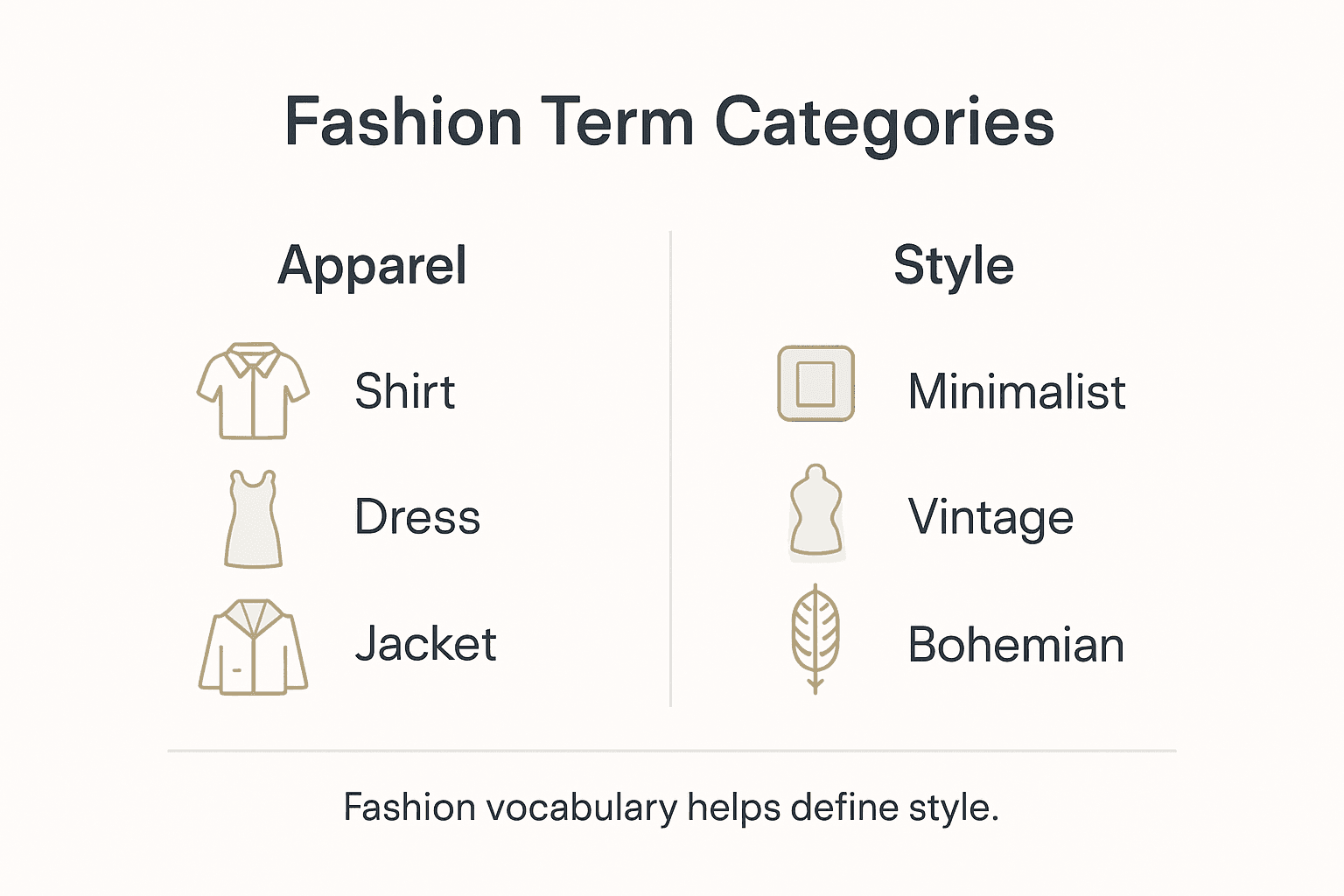
Traditionally, fashion terms are categorized into several key areas. Apparel terminology includes specific descriptions of clothing types, cuts, and silhouettes. Accessory terminology covers everything from bags and jewelry to shoes and belts. Material terminology delves into fabric types, textures, and textile compositions. Professional resources like FASHIONPEDIA organize thousands of technical terms into clear, navigable sections, making it easier to understand the nuanced language of fashion.
Beyond technical classifications, fashion terminology also encompasses cultural and historical contexts. Terms can be grouped by design aesthetic (like bohemian, minimalist, or avant-garde), geographical origin (such as Parisian haute couture or Japanese street style), and historical periods (from Victorian to Art Deco). These categorizations help us understand fashion not just as clothing, but as a dynamic form of cultural expression and communication.
Pro tip: Create a personal fashion terminology glossary to track and remember new style vocabulary as you explore different design concepts and trends.
Below is a summary table of major categories in fashion terminology and what each covers:
| Category | Key Focus Areas | Example Terms |
|---|---|---|
| Apparel | Types, cuts, silhouettes | A-line, pencil skirt |
| Accessories | Shoes, bags, jewelry, belts | Tote, brooch |
| Materials | Fabrics, textures, compositions | Silk, denim |
| Aesthetic/Style | Design philosophies, visual styles | Bohemian, minimalism |
This table gives a quick overview of the main divisions in fashion vocabulary.
Key Garment and Style Vocabulary Explained
Clothing terminology represents a complex linguistic landscape that goes far beyond simple descriptions of what we wear. These specialized terms help fashion enthusiasts, designers, and professionals communicate precise details about style, construction, and cultural significance.
At its core, garment vocabulary encompasses several critical categories. A garment is fundamentally defined as a piece of clothing with specific characteristics that distinguish its purpose and design. Silhouette terms describe the overall shape and fit of clothing, such as A-line, pencil, bell, and empire cuts. Length descriptors like mini, midi, maxi, and tea-length provide additional context about hemline positioning, while fabric terminology includes materials ranging from chiffon and silk to denim and cotton.

Beyond technical classifications, garment vocabulary also reflects cultural and historical contexts. Terms like vintage, haute couture, ready-to-wear, and bespoke communicate not just the physical attributes of clothing, but also its social and artistic significance. Each term carries nuanced implications about craftsmanship, origin, and the emotional relationship between the wearer and their chosen ensemble.
Pro tip: Create a personal fashion vocabulary journal where you document and explore new style terms to deepen your understanding of fashion language.
How Fashion Terms Shape Wardrobe Choices
Fashion psychology reveals how clothing choices are deeply connected to personal identity and social communication, transforming wardrobe selection from a simple act of covering oneself into a powerful form of self-expression.
Every fashion term carries psychological weight in wardrobe decision-making. Silhouette descriptors like tailored, relaxed, or structured signal more than just fit - they communicate personal values and emotional states. When someone chooses a power suit versus bohemian layers, they’re making a nuanced statement about their inner narrative. Clothing transmits messages about social role, group membership, and personal values, with each selected piece functioning as a non-verbal language of personal identity.
Understanding fashion terminology empowers individuals to curate wardrobes that authentically represent their complex, multifaceted selves. Terms like minimalist, maximalist, vintage, and contemporary provide frameworks for exploring personal style beyond superficial trends. These categories offer psychological anchors, helping people navigate the intricate relationship between clothing and self-perception, allowing for more intentional and meaningful wardrobe choices.
Pro tip: Experiment with fashion terms that resonate with your personal narrative to unlock more intentional and confident styling.
Common Misunderstandings in Fashion Language
Fashion psychology reveals the complex interpretations underlying clothing terminology, exposing how language can create profound misunderstandings about style and personal expression.
Many people mistakenly believe fashion terms are universal, when in reality, they are deeply contextual and culturally nuanced. Trendy doesn’t mean the same thing in New York as it does in Paris, and classic can signify different aesthetic approaches depending on geographic and social contexts. The disconnect between fashion text and object creates ongoing confusion in how we communicate style, particularly in our increasingly global and digital world.
Some of the most common misunderstandings emerge from terms that seem straightforward but carry complex meanings. Minimalist isn’t just about fewer pieces, but a philosophical approach to design. Vintage doesn’t simply mean old clothing, but a carefully curated selection representing specific historical moments. Sustainable fashion goes beyond eco-friendly materials to encompass ethical production, worker rights, and long-term environmental impact. Understanding these nuanced definitions helps individuals make more intentional and meaningful fashion choices.
To clarify how common fashion terms differ by context, see this comparison table:
| Term | Common Misconception | True Meaning | Cultural Nuance |
|---|---|---|---|
| Vintage | Just old clothing | Curated, historical selections | Varies by era and locale |
| Minimalist | Fewer pieces | Intentional, purposeful design | Seen as lifestyle or artistic choice |
| Sustainable | Only eco-friendly materials | Ethical & long-term impact | Includes labor and production ethics |
| Classic | Always the same style | Enduring, timeless design | Differs across global fashion centers |
This table highlights how context can reshape fashion term meanings.
Pro tip: Research the cultural and historical context behind fashion terms to develop a more sophisticated understanding of style language.
Elevate Your Style with Words That Speak Your Truth
Understanding fashion terminology unlocks the power to express your unique identity through clothing. Whether you resonate with silhouettes like tailored or relaxed, or aspire to define your look with styles from minimalist to vintage, the right wardrobe choices can communicate your personal story. At Be Juliet, we embrace the challenge of helping you translate these style concepts into outfits that truly reflect your essence.
Discover collections that marry comfort and confidence with thoughtful design. Explore our Women’s Outerwear – Coats, Jackets, Blazers & More for pieces that articulate sophistication and strength. For moments that call for effortless ease, our Sweaters & Sweatshirts provide embracing warmth without sacrificing style. Each garment is crafted to speak the language of love and self-expression. Start your journey today at Be Juliet and transform your wardrobe into a powerful narrative of who you are.
Frequently Asked Questions
What is the importance of understanding fashion terminology?
Understanding fashion terminology allows individuals to navigate the complex language of fashion, facilitating better self-expression and communication about style.
How can learning fashion terms enhance personal style?
Learning fashion terms helps individuals articulate their style preferences and curate wardrobes that authentically reflect their identity and values.
What are some key categories included in fashion terminology?
Key categories of fashion terminology include apparel, accessories, materials, and aesthetic/style, each providing insights into different aspects of design and personal expression.
How can misconceptions about fashion terminology impact self-expression?
Misunderstandings around fashion terms can lead to confusion in communication, making it difficult to accurately represent personal style or connect with others through fashion.