
Creating Mood With Fashion: Intentional Style Choices
Fashion influences mood more than most American women realize. Scientific research shows that over 80 percent of women feel emotionally impacted by their clothing choices every day. For urban professionals juggling casual lunches and office meetings, the right outfit can be a true mood-booster. Learn how intentional styling, color, and fabric selection help you curate love-inspired looks that uplift your spirits while fitting every part of your modern lifestyle.
Table of Contents
- Defining Fashion’s Influence on Mood
- Color Psychology and Emotional Impact
- Fabric Choices for Comfort and Energy
- Silhouette and Styling for Self-Expression
- Intentional Mood Dressing for Daily Life
- Common Mistakes in Mood Dressing
Key Takeaways
| Point | Details |
|---|---|
| Fashion Influences Emotions | Clothing acts as a psychological tool that shapes mood and self-perception while influencing interpersonal interactions. |
| Color Affects Emotional Responses | Color choices in fashion can significantly impact psychological states, transforming emotional experiences through intentional selection. |
| Fabric Selection Matters | The type of fabric influences physical comfort and emotional energy, making it essential to choose materials aligned with desired emotional states. |
| Intentional Dressing Strategy | Curating outfits based on emotional goals enhances well-being, turning clothing into tools for mood regulation and self-expression. |
Defining Fashion’s Influence on Mood
Fashion is far more than just fabric and design—it’s a powerful psychological tool that shapes our emotional landscape. Clothing choices are intimate expressions of our inner world, serving as a dynamic interface between our internal feelings and external presentation. Psychological research on fashion’s emotional impact reveals how our wardrobe selections profoundly influence mood, self-perception, and interpersonal interactions.
At its core, fashion operates as a non-verbal language of emotion. When we select an outfit, we’re not merely choosing clothes but curating an emotional experience. A sharp blazer might signal confidence, while soft, flowing fabrics can evoke tranquility. This emotional resonance isn’t coincidental—it’s rooted in deep psychological mechanisms where clothing becomes an extension of our psychological state and desired emotional narrative.
Interestingly, the relationship between fashion and mood is bidirectional. Our clothing doesn’t just reflect our current emotional state; it can actively transform it. Wearing bold colors or structured silhouettes can trigger increased self-assurance, while comfortable, relaxed clothing can induce a sense of calm. This transformative power means fashion isn’t passive—it’s an active tool for emotional regulation and self-expression.
Pro tip: Intentionally choose clothing that matches or elevates the emotional state you want to cultivate for your day, treating your wardrobe as a strategic emotional toolkit.
Here is a summary of how different fashion elements influence emotional and psychological states:
| Fashion Element | Emotional Effect | Self-Perception Impact | Social Signal |
|---|---|---|---|
| Color | Boosts energy or calm | Shapes mood and confidence | Communicates emotional tone |
| Fabric | Provides comfort, ease | Enhances physical well-being | Signals quality or warmth |
| Silhouette | Conveys confidence, flow | Reflects identity and values | Broadcasts individuality |
| Styling | Encourages creativity | Fosters self-assurance | Marks intent and personality |
Color Psychology and Emotional Impact
Color is a silent communicator, speaking volumes about our emotional landscape without uttering a single word. Color psychology in fashion design reveals how specific hues can dramatically influence our psychological state, transforming not just our appearance but our entire emotional experience. Each color carries a unique emotional signature, capable of triggering complex psychological responses that extend far beyond aesthetic appeal.
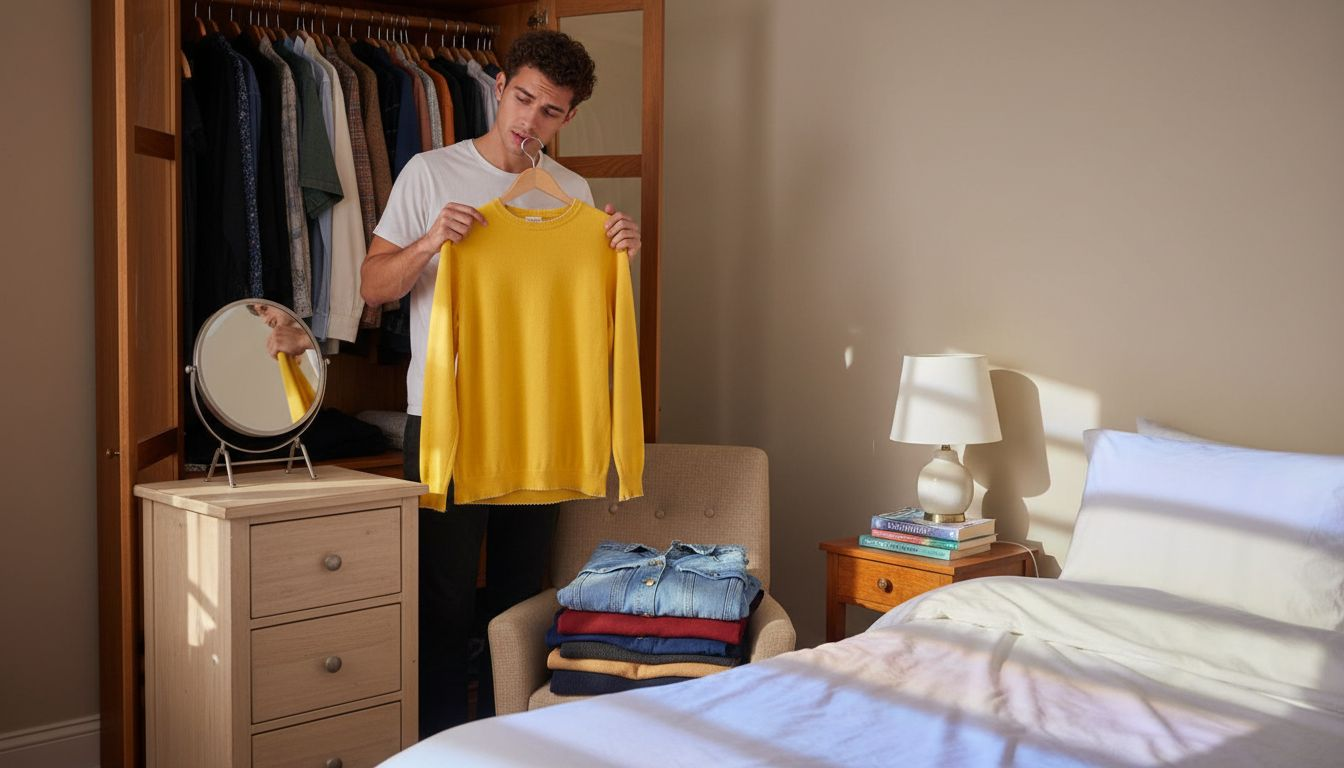
Different colors evoke distinctive emotional responses rooted in both cultural contexts and biological reactions. Warm tones like red and orange can spark energy and passion, while cool blues and greens often induce calmness and introspection. Soft pastels might communicate vulnerability and gentleness, whereas deep, rich jewel tones can signal sophistication and emotional depth. This nuanced language of color allows individuals to communicate intricate emotional narratives through their wardrobe choices.
Understanding color’s emotional impact goes beyond mere aesthetic preference. Psychological research on color theory demonstrates that our color choices can actively shape our mood, self-perception, and interactions. A bright yellow blazer might boost confidence during a challenging workday, while a soft lavender sweater could provide emotional comfort during moments of stress. By strategically selecting colors that align with our desired emotional state, we transform clothing from a passive covering to an intentional emotional tool.
Pro tip: Build a versatile wardrobe with colors that correspond to different emotional needs, allowing you to curate your psychological experience through thoughtful color selection.
Fabric Choices for Comfort and Energy
Fabric is more than just a material covering our body—it’s a dynamic interface that directly influences our physical comfort and emotional energy. Textile science reveals how different fabric properties can profoundly impact our physiological state, transforming the way we experience movement, temperature, and overall well-being. The right fabric can be a powerful tool for managing our internal climate and emotional landscape.
Natural fibers like cotton, linen, and silk offer unique energetic qualities that synthetic materials cannot replicate. Breathable fabrics allow our skin to regulate temperature efficiently, creating a sense of physical ease that translates into emotional calm. Lightweight, flowing materials like silk can induce a sense of grace and fluidity, while structured cotton can provide a grounding, confident sensation. Sustainable material selection goes beyond aesthetic considerations, focusing on how fabric nature inherently supports our physical and psychological comfort.
The texture and weight of fabric play crucial roles in energy manipulation. Soft, plush materials like cashmere and merino wool can create a sense of comfort and protection, ideal for moments when we need emotional nurturing. Crisp, structured fabrics like tailored cotton or lightweight wool blends can generate a feeling of precision and confidence. By intentionally selecting fabrics that align with our desired emotional state, we transform clothing from a passive covering to an active tool for mood management and self-expression.
Pro tip: Create a versatile wardrobe with fabrics that serve different emotional purposes, allowing you to strategically dress for your desired energy and mood.
Silhouette and Styling for Self-Expression
Silhouettes are more than just clothing shapes—they are powerful vehicles of personal narrative and emotional communication. Fashion as self-expression reveals how our clothing choices become a complex language of identity, communicating layers of personality beyond verbal expression. Every curve, line, and structural element of our outfit tells a story about who we are and how we want to be perceived in the world.
Different silhouettes communicate distinct emotional states and personal attributes. Structured, tailored pieces suggest confidence and precision, while flowing, soft lines convey vulnerability and introspection. Wide-leg pants might signal a sense of relaxed independence, whereas a fitted blazer communicates professional ambition. Unconventional fashion forms challenge traditional expectations, allowing individuals to push boundaries and redefine personal style narratives.
The art of styling goes beyond simply selecting garments—it’s about curating an ensemble that reflects your inner landscape. Layering can add complexity to your emotional expression, mixing textures and volumes to create depth and nuance. Oversized jackets might provide a sense of protection, while cropped tops can communicate boldness and freedom. By understanding how different cuts and shapes interact with our bodies and energy, we transform fashion from mere clothing into a dynamic form of self-communication.
Pro tip: Experiment with silhouettes that feel authentically you, understanding that your style is a living, evolving expression of your inner self.
Intentional Mood Dressing for Daily Life
Intentional dressing transforms fashion from a passive act into a powerful psychological strategy for navigating daily emotional landscapes. Conscious wardrobe choices enable individuals to curate their emotional experience, using clothing as a deliberate tool for mood management and self-expression. This approach recognizes that what we wear is not just about external appearance, but about creating an internal emotional environment that supports our well-being.
Mood dressing involves strategic outfit selection based on the emotional state we want to cultivate or enhance. A structured blazer might signal professional confidence during a challenging work presentation, while soft, flowing fabrics could provide comfort during moments of stress. Clothing characteristics relating to mood demonstrate how specific design elements can act as emotional anchors, helping us navigate complex psychological terrains with intentionality and grace.
The practice of intentional mood dressing goes beyond simply choosing clothes that look good—it’s about creating a holistic sensory experience that aligns with our internal emotional needs. By understanding the psychological impact of textures, colors, and silhouettes, we can design daily outfits that serve as emotional support systems. This might mean selecting a soft, oversized sweater when seeking comfort, or a vibrant, bold ensemble when we need an energy boost, transforming our wardrobe into a dynamic emotional toolkit.
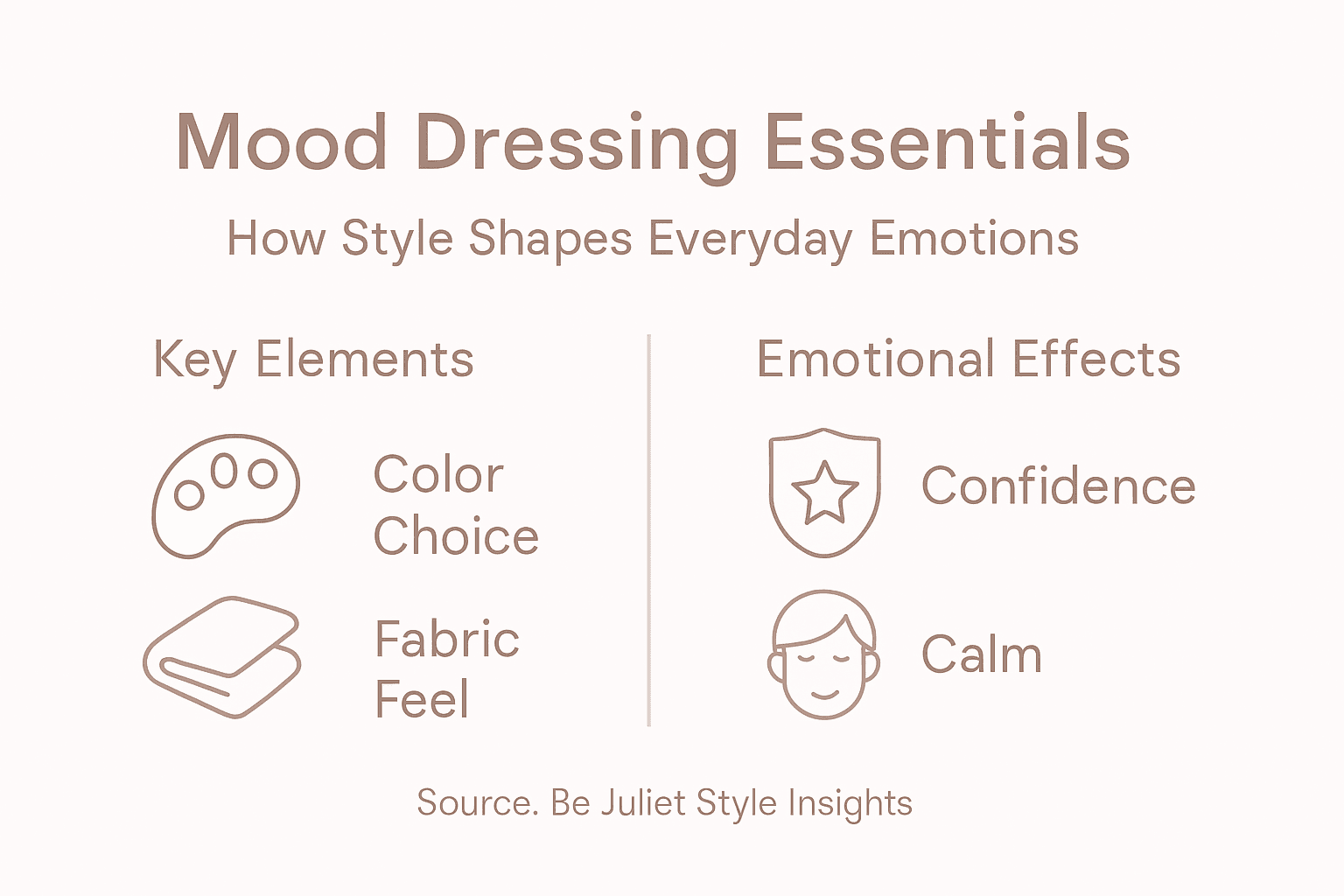
Pro tip: Create a mood-mapping wardrobe where each piece represents a specific emotional state, allowing you to dress with purpose and emotional intelligence.
Common Mistakes in Mood Dressing
Mood dressing is an art form that requires nuanced understanding and intentional choices. Mood mismatches in clothing can significantly impact our emotional experience, often amplifying negative feelings or creating psychological dissonance. The most critical mistake is selecting garments that contradict our internal emotional landscape rather than supporting our desired state of being.
One fundamental error in mood dressing involves prioritizing external trends over personal comfort and authentic expression. Many individuals mistakenly choose clothing that looks trendy but feels uncomfortable, neglecting the crucial connection between physical sensation and emotional well-being. Dopamine dressing pitfalls reveal that blindly following color or style trends without considering personal style can lead to feelings of inauthenticity and reduced confidence.
Another significant mistake is overlooking the subtle psychological impact of fabric, texture, and fit. Wearing tight, restrictive clothing when seeking emotional freedom, or choosing harsh, scratchy materials during moments requiring gentleness, can create internal friction. The most successful mood dressing strategies involve a holistic approach that considers not just color and style, but the entire sensory experience of clothing—how it feels against the skin, how it moves with the body, and how it resonates with our inner emotional state.
Pro tip: Create a wardrobe mood journal to track how different clothing pieces make you feel, helping you develop a more intuitive and intentional approach to dressing.
Here is a reference table of common mood dressing mistakes and more intentional alternatives:
| Common Mistake | Typical Outcome | Intentional Approach | Resulting Benefit |
|---|---|---|---|
| Following trends blindly | Feels inauthentic | Choose comfort and meaning | Boosts confidence |
| Ignoring fabric sensations | Physical discomfort | Select pleasant textures | Enhances emotional comfort |
| Overlooking color impact | Mood mismatch | Align colors with emotions | Supports desired mental state |
| Prioritizing appearance | Emotional dissonance | Consider psychological effect | Promotes well-being |
Elevate Your Mood with Intentional Style Choices from Be Juliet
The challenge of mood dressing lies in selecting pieces that truly resonate with your inner emotional landscape. This article reveals how colors, fabrics, and silhouettes shape your self-expression and emotional wellbeing. At Be Juliet, we understand the importance of curating a wardrobe that reflects your authentic mood and personality each day without sacrificing comfort or style. Whether you want to feel empowered in a structured corset or bustier or crave cozy tranquility from our soft sweaters & sweatshirts, we have the perfect pieces to help you create intentional emotional experiences through fashion.
Discover how you can transform your wardrobe into a dynamic emotional toolkit by exploring our latest collections at Be Juliet. Embrace the spirit of love and self-expression as you dress with purpose today. Visit our New In section now to start building a mood-mapping wardrobe that supports your confidence, comfort, and creativity in every moment.
Frequently Asked Questions
How does fashion influence mood?
Fashion serves as a powerful psychological tool that can shape our emotional landscape. Our clothing choices reflect our inner feelings and can actively transform our mood, enhancing self-perception and interpersonal interactions.
What role does color play in mood dressing?
Color affects our emotional state significantly. Different hues evoke various feelings—warm tones can boost energy, while cool colors often induce calmness. Strategically selecting colors that resonate with desired emotions can enhance our overall well-being.
Why is fabric choice important for emotional comfort?
The type of fabric we wear influences our physical comfort and emotional energy. Natural fibers like cotton and silk can create a sense of ease, while structured fabrics may induce confidence. Selecting the right fabric aligns with our emotional needs, enhancing overall mood.
What are common mistakes in mood dressing?
Common mistakes include prioritizing trends over comfort, ignoring the psychological effects of fabric and fit, and overlooking the emotional impact of colors. An intentional approach involves choosing pieces that resonate with our internal emotional state, promoting well-being.
Recommended
- Fashion and Mental Health: How Your Style Impacts Your Wellbeing – Be Juliet
- Fashion and Emotion: How Clothing Shapes Mood – Be Juliet
- Emotion in Fashion – Shaping Identity and Confidence – Be Juliet
- Wellness and Fashion – How Clothing Elevates Mood – Be Juliet
- Best Personalized Hair Care Kits – Expert Comparison 2025 | MyHair
- Come Leggere l’INCI (Nomenclatura Internazionale degli Ingredienti Cosmetici) - Parrucchiere Organic Milano