
Finding fashion icons: 75% inspire authentic style evolution
You might think that celebrity is the biggest marker of a true fashion icon. Actually, 40% of young women misidentify celebrities as fashion icons based on media visibility rather than lasting style influence. This guide helps you discover authentic fashion icons who resonate personally and culturally, empowering you to evolve your style with confidence and intention.
Table of Contents
- Understanding What Defines A Fashion Icon
- Common Misconceptions About Fashion Icons
- How To Evaluate And Compare Fashion Icons
- Bridging Inspiration To Personal Style Evolution
- The Role Of Diversity And Emerging Icons
- Explore More With Be Juliet: Your Fashion Story Starts Here
- Frequently Asked Questions
Key takeaways
| Point | Details |
|---|---|
| Fashion icons have cultural and historical significance | Over 75% of recognized fashion icons emerged during periods of social change, reflecting cultural shifts that shape lasting style. |
| Authenticity matters more than fame | Celebrity status alone doesn’t define lasting influence or meaningful style impact. |
| Use a framework to evaluate icons | Assess icons based on creativity, cultural impact, authenticity, and adaptability to find genuine inspiration. |
| Personal connection drives authentic style | Emotional resonance with an icon supports satisfying style evolution and confidence. |
| Diversity expands your style options | Inclusive icon choices enhance cultural relevance and personal expression. |
Understanding what defines a fashion icon
True fashion icons embody cultural narratives and historical eras. They emerge during moments of social change, using style as a voice for shifting values. Audrey Hepburn epitomized post-war elegance and independence, while modern icons like Rihanna challenge beauty norms and celebrate diversity.
Lasting influence is tied to three core traits: authenticity, consistency, and adaptability. Authentic icons stay true to their vision rather than chasing every trend. Consistent icons maintain recognizable signatures that evolve without losing identity. Adaptable icons refresh their style to stay culturally relevant while preserving their essence.
Fashion icons inspire confidence and attitude, beyond just looks. When you connect with an icon, you’re drawn to how they carry themselves and express values through clothing. This emotional resonance transforms style from surface aesthetics into meaningful self-expression.
Consider iconic figures from different eras. Coco Chanel liberated women from corsets, creating timeless simplicity. David Bowie used fashion to explore identity fluidity. Both influenced fashion trends and social attitudes simultaneously. Their impact reached far beyond the clothes themselves.
Timeless fashion icons share these defining qualities:
- Cultural relevance that reflects or shapes societal values
- Signature style elements that remain recognizable across decades
- Authenticity that resonates emotionally with diverse audiences
- Influence extending beyond fashion into art, music, or social movements
- Adaptability that allows evolution without losing core identity
Recognizing these traits helps you identify icons who offer genuine inspiration rather than fleeting trends.
Common misconceptions about fashion icons
Not all celebrities are true fashion icons. Fame and visibility don’t guarantee lasting style influence or cultural significance. Many celebrities wear designer pieces for events but lack the authentic vision that defines iconic status. Celebrity status alone does not define a fashion icon’s lasting influence or style impact.
Copying an icon’s style exactly reduces style satisfaction. When you replicate outfits without adapting them to your personality, you create a costume rather than authentic expression. This approach limits creativity and prevents you from developing a signature style that reflects your evolving identity.
Fashion icons are not limited to runway or celebrity culture. Street style innovators, cultural figures, and everyday style leaders can embody iconic qualities. The rise of diverse fashion voices proves that authentic influence comes from vision and cultural resonance, not just industry access or media coverage.
Icons deeply influence confidence and self-expression, not just appearance. The most meaningful icon connections inspire how you feel in your clothes and how you project your values. This emotional dimension separates superficial imitation from transformative style inspiration.
Recognize and avoid these common fashion mistakes to avoid:
- Prioritizing fame over authentic style vision and cultural impact
- Copying entire outfits rather than adapting inspiring elements
- Limiting icon choices to one demographic or cultural background
- Focusing solely on aesthetics without considering values or attitude
- Expecting instant style transformation instead of gradual evolution
Pro Tip: If you can’t explain why an icon inspires you beyond their looks, dig deeper. Authentic connections are rooted in shared values, cultural resonance, or emotional responses to how they express themselves.
Understanding these misconceptions clears the path for discovering icons who genuinely support your style evolution.
How to evaluate and compare fashion icons
Using a framework based on creativity, authenticity, cultural impact, and adaptability improves icon selection. This structured approach helps you assess how potential icons align with your personal style goals and cultural values.
Evaluate icons through four key dimensions:
- Creativity measures how an icon innovates and pushes style boundaries
- Authenticity assesses consistency between their public image and personal values
- Cultural impact examines their influence on broader fashion conversations and social attitudes
- Adaptability evaluates how their style evolves while maintaining core identity
Comparison helps identify best fits for evolving style. Use this framework to evaluate and compare fashion icons across different eras and cultural contexts.
| Icon Trait | Audrey Hepburn | Rihanna | Harry Styles |
|---|---|---|---|
| Creativity | Minimalist elegance redefined post-war femininity | Bold genre mixing challenges beauty norms | Gender-fluid fashion explores masculine/feminine balance |
| Authenticity | Consistent grace and simplicity across decades | Unapologetic self-expression in all contexts | Genuine experimentation without pretense |
| Cultural Impact | Influenced women’s liberation through style | Celebrates diversity and body positivity | Normalizes gender fluidity in mainstream fashion |
| Adaptability | Timeless pieces remain relevant today | Constantly evolves while staying true to bold vision | Pushes boundaries while maintaining accessible appeal |
This framework encourages thoughtful, personalized icon choices rather than following trends blindly. You can apply it to both established and emerging icons to find authentic inspiration.
Pro Tip: Create your own comparison chart with icons you’re drawn to. Rate each dimension on a scale of one to five. This visual exercise reveals which icons align most closely with your style goals and values.
Avoid overemphasizing fame or trendiness. An icon’s current popularity matters less than their lasting vision and cultural resonance. Focus on figures whose style journey mirrors values you want to express through fashion.
Bridging inspiration to personal style evolution
Analyze icons’ style consistency and cultural relevance before adapting elements. Notice which pieces appear repeatedly in their wardrobe and how they modernize signature looks over time. This analysis reveals adaptable elements that transcend specific trends.

Adapt elements to your wardrobe avoiding direct imitation. Choose one or two signature pieces or styling techniques that resonate with you. If an icon loves bold prints, experiment with printed accessories before committing to statement pieces. Adapting icon elements authentically and emotionally connects supports satisfying style evolution.
Connect emotionally for authentic inspiration. Ask yourself why specific looks or attitudes appeal to you. Does an icon’s confidence inspire you? Does their cultural background reflect your heritage? Emotional connections create sustainable style evolution rather than temporary costume changes.
Incorporate style in ways that enhance confidence. Start with small changes that feel comfortable and gradually build. If you admire an icon’s layering technique, practice with pieces you already own before investing in new items. Style evolution works best when changes feel natural rather than forced.
Common mistakes to avoid for fulfilling style growth:
- Copying outfits exactly without considering your lifestyle needs
- Ignoring budget realities when adapting luxury icon looks
- Abandoning your existing style completely for a dramatic transformation
- Choosing icons based solely on current trends or social media popularity
- Neglecting the emotional and cultural dimensions of icon connections
Explore fashion inspiration tips that emphasize adaptation over imitation. Learn how personal style evolution happens gradually through thoughtful experimentation. Discover ways to wear fashion influencer styles in everyday contexts without losing authenticity.
The goal is expressing self through fashion in ways that feel genuine and empowering. When you bridge inspiration to personal style thoughtfully, you create a wardrobe that reflects your evolving identity rather than mimicking someone else’s aesthetic.
The role of diversity and emerging icons
Growing demand for diverse representation in fashion icons reflects cultural shifts toward inclusivity. Women want to see themselves reflected in the icons they admire, across body types, ethnicities, gender expressions, and cultural backgrounds. This demand pushes the fashion industry to recognize broader definitions of style influence.
Emerging icons from street style and non-celebrity backgrounds offer fresh perspectives. Social media platforms enable everyday style innovators to build authentic followings based on creative vision rather than industry connections. These emerging voices often feel more accessible and relatable than traditional celebrity icons.
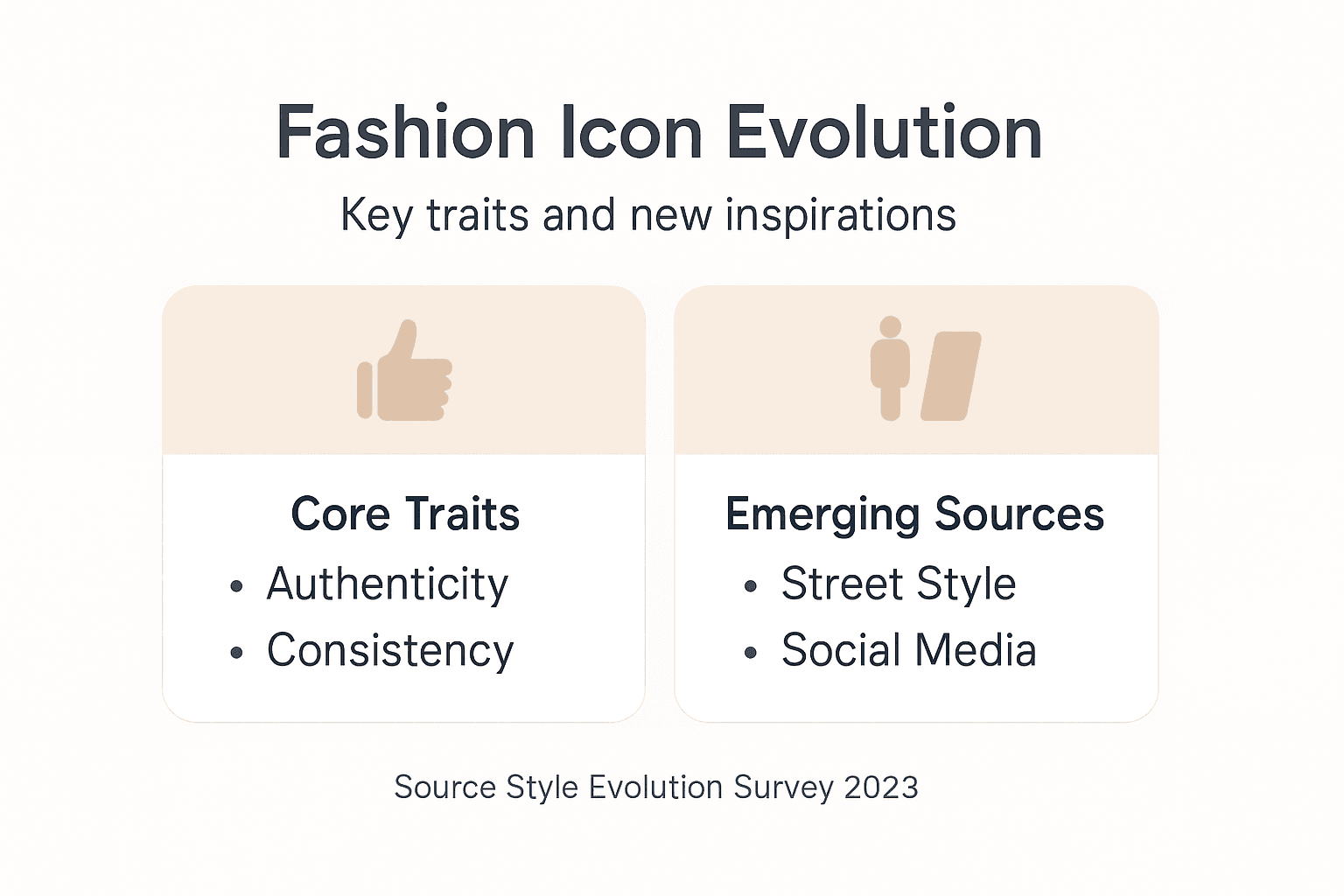
The rise of street style and diverse icons broadens cultural relevance and personal expression in fashion. When you draw inspiration from various sources, you create a richer, more personalized style that reflects multiple facets of your identity.
Diversity expands options and personal resonance in several ways:
- Representation across body types shows how style adapts to different forms
- Cultural diversity introduces techniques, patterns, and silhouettes from global traditions
- Age diversity demonstrates style evolution across life stages
- Gender diversity challenges restrictive fashion categories and expands creative possibilities
- Socioeconomic diversity proves that iconic style doesn’t require unlimited budgets
Inclusivity enhances cultural relevance of personal style. When you explore diverse emerging fashion icons, you discover elements that resonate with your specific cultural context and personal experiences. This relevance makes style feel meaningful rather than superficial.
Embracing diverse icons supports authentic evolution. You’re not limited to one aesthetic or cultural perspective. Instead, you can draw inspiration from multiple sources, creating a unique style blend that reflects your complex identity and evolving values.
Explore more with Be Juliet: your fashion story starts here
Now that you understand how to find authentic fashion icons, deepen your style journey with Be Juliet’s curated resources. Our guides connect fashion knowledge with personal growth, helping you express your evolving identity through clothing that feels genuinely you.
Discover how fashion tells personal stories through symbolic choices and emotional connections. Learn about the surprising link between fashion and mental health, understanding how your wardrobe choices impact daily confidence and wellbeing. Explore the deeper relationship between fashion and self-identity, discovering how style evolution mirrors personal growth.
Be Juliet offers timeless, inspired pieces that support your authentic expression. Whether you’re channeling bold confidence or embracing laid-back elegance, our collections help you build a wardrobe that evolves with you.
Frequently asked questions
How do I tell if someone is a true fashion icon?
Look beyond fame and media visibility to assess lasting influence and cultural impact. True icons demonstrate consistent authenticity, signature style elements that evolve over time, and influence that extends beyond fashion into broader cultural conversations. If their style inspires emotional resonance and reflects meaningful values rather than just aesthetic appeal, they likely possess iconic qualities.
Can I have more than one fashion icon?
Absolutely, and having multiple icons often enriches your style development. Different icons can inspire various aspects of your wardrobe, from casual weekend looks to professional attire. Diversity in your icon choices reflects your multifaceted personality and allows you to express different moods and contexts authentically.
How do I avoid copying an icon and stay authentic?
Focus on adapting specific elements rather than replicating entire outfits. Choose one or two signature techniques, like layering methods or color palettes, that resonate with your lifestyle and personality. The key is inspiration, not duplication. Ask yourself how each element serves your daily life and self-expression goals.
Why is diversity important in choosing fashion icons?
Diverse icon choices provide wider representation and expose you to different cultural aesthetics and styling traditions. This variety expands your creative toolkit and ensures your style feels culturally relevant and personally authentic. Inclusive inspiration sources help you develop a richer, more nuanced personal style that reflects your complex identity.