

Why Fashion Matters Book: Key Insights on Style and Identity
TL;DR:
- Fashion is a complex social language that reflects cultural identity, status, and psychological states.
- Fashion books preserve design history and restore authorship, emphasizing craftsmanship over fleeting trends.
Fashion gets dismissed as shallow all the time. Pick up the Why Fashion Matters book, though, and that dismissal falls apart within the first few pages. What Frances Corner’s work makes clear is that fashion is not about vanity. It is a sophisticated social language, a psychological tool, and a mirror reflecting culture back at itself. If you have ever felt like your clothing choices carry more weight than you can fully explain, this book gives you the vocabulary and the framework to understand why. Here is what it actually says, and why it matters to how you dress today.
Table of Contents
- Key Takeaways
- Fashion as a social communication tool
- The psychology behind what you wear
- Fashion’s cultural and economic weight
- Why fashion books matter for creative culture
- My take on fashion as personal storytelling
- Shop the look that tells your story
- FAQ
Key Takeaways
| Point | Details |
|---|---|
| Fashion signals social identity | Clothing communicates group belonging, status, and personal intentions through subtle nonverbal cues. |
| Clothes affect your mindset | Enclothed cognition shows that what you wear genuinely shifts your confidence, mood, and performance. |
| Wellness and wardrobe are connected | Satisfaction with your clothing choices predicts better well-being and stronger social engagement. |
| Sustainability is reshaping fashion values | Younger consumers are actively demanding ethical, slow fashion over disposable trends. |
| Fashion books restore creative depth | Literature around fashion slows down the conversation and restores authorship to design. |
Fashion as a social communication tool
Most people understand that a suit signals professionalism or that a band tee signals a tribal affiliation. What the Why Fashion Matters book explores, though, goes much deeper than that. Fashion operates as a coordination tool for social signals, communicating social categories, intentions, and status in ways that are often subtle enough to avoid triggering social backlash.
This concept is called “signal burying.” Instead of openly advertising wealth or status, a person might choose a particular fabric, cut, or brand that only a culturally informed observer would recognize. It is a form of nonverbal social communication that allows you to speak to the people you want to reach without broadcasting to everyone in the room.
Think about how this plays out in real life:
- A minimalist white button-down from a luxury brand reads as understated refinement to those in the know, but looks unremarkable to someone unfamiliar with the label.
- A specific sneaker colorway signals belonging in a subculture without saying a single word.
- Choosing vintage over fast fashion communicates values about sustainability and individuality in one outfit choice.
The importance of fashion as a social signal is not trivial. First impressions are built on it. Group membership is confirmed through it. Your outfit does not just tell people who you are. It tells them what world you inhabit.
Pro Tip: Pay attention to what your go-to outfits signal to others, not just to yourself. Fashion’s role in society is partly about the conversation your clothes start before you open your mouth.
The psychology behind what you wear
Frances Corner’s work touches on something that psychologists have been studying more seriously in recent years: enclothed cognition. The idea is that clothing affects mood and self-perception in measurable ways. Wearing a structured blazer can shift your posture and your mental energy. Pulling on a soft, well-fitting knit set on a slow Sunday morning changes how gently you move through the day. These are not accidents.
Fashion is genuinely becoming a wellness language. When your clothing aligns with how you feel internally, or how you want to feel, the effect is real and documented. Here is how the Why Fashion Matters book frames this idea in practice:
- Dress for the mood you want, not just the one you have. A well-fitted outfit on a hard day is not superficial. It is a nudge toward confidence when you need it most.
- Choose clothing that fits your actual body today. Research shows that clothing satisfaction predicts well-being and reduced social avoidance in women, particularly in midlife.
- Use your wardrobe as a form of self-expression. When your clothes feel authentic to who you are, they support belonging, not performance.
- Give yourself permission to dress for comfort and beauty at once. The two are not opposites. A stretchy knit set that makes you feel pulled-together is both.
Understanding fashion as self-care is not a modern marketing spin. The why fashion matters argument is grounded in real psychological research, and Corner’s book draws on that evidence compellingly.
Pro Tip: If you find yourself dreading getting dressed, that is useful information. Your wardrobe may not be reflecting who you actually are right now. A small refresh, not a full overhaul, can shift that.
Fashion’s cultural and economic weight
The impact of fashion on culture and commerce is staggering, and the Why Fashion Matters book does not shy away from the bigger picture. One of the most striking trends shaping fashion in 2026 is the shift in consumer values. 75% of millennials and Gen Z consumers are willing to pay more for ethical fashion. That is not a niche preference. That is a market force.
The slow fashion movement is part of this cultural reckoning. Consumers are increasingly rejecting the disposable cycle and seeking pieces with intentionality behind them. Learning about responsible fashion choices has moved from niche activism to mainstream consideration.
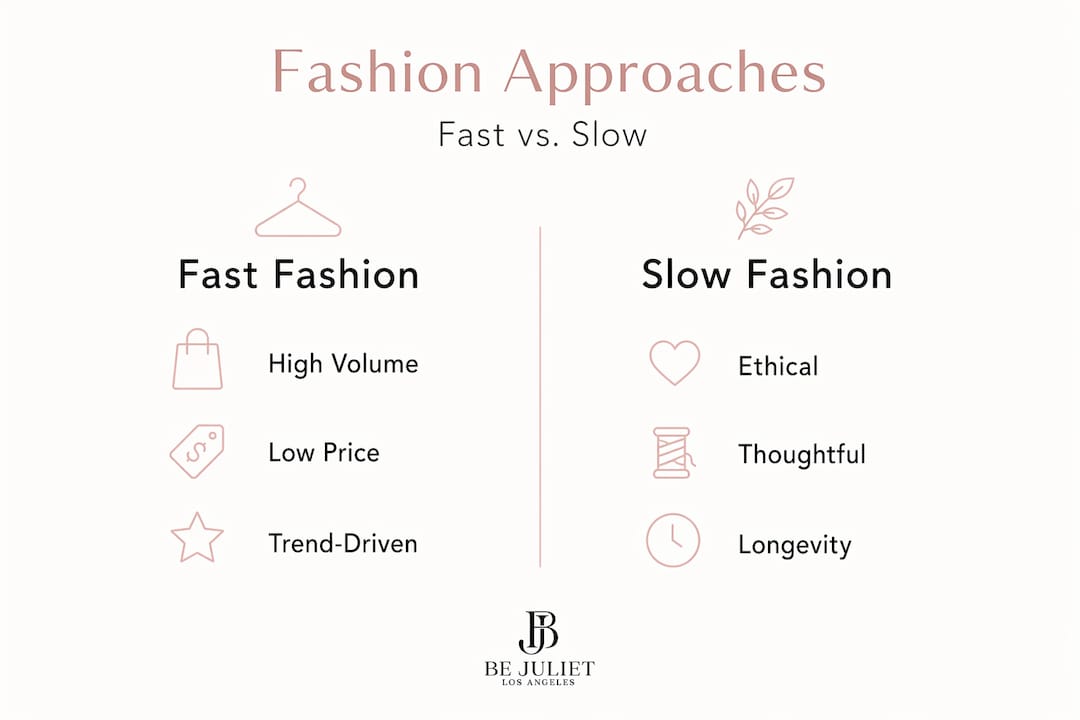
Here is how the fashion conversation has shifted between fast and slow approaches:
| Fast Fashion | Slow Fashion |
|---|---|
| High volume, low price | Lower volume, thoughtful production |
| Trend-driven, seasonal | Design-driven, timeless |
| Anonymous manufacturing | Transparent sourcing |
| Disposable mentality | Investment mindset |
| Speed over integrity | Craft over quantity |
Luxury brands have recognized this shift too. They are aligning with literature, art, and cultural depth to signal that they operate in a different register entirely from mass-market fast fashion. The fashion culture book phenomenon is part of that positioning. When a brand publishes a beautifully made book, it is not just marketing. It is a statement about values, pace, and intellectual seriousness.
Why fashion books matter for creative culture
Here is something the average style scroll will not tell you: fashion books document creative history in ways that Instagram never could. They record the apprenticeships, the risks, the cultural moments, and the design philosophies that give fashion its meaning over time.
The Why Fashion Matters book, along with other fashion culture books, performs an act of restoration. In an industry obsessed with speed, a book forces you to slow down. Reading a 300-page book takes roughly 10 hours, and that time investment is precisely the point. It pulls fashion out of the scroll and into the realm of considered thought.
Fashion literature also restores authorship. When a designer’s philosophy, process, and cultural influences are documented in depth, the work is no longer just a product. It becomes art with a story and a creator behind it. Books counter fashion’s obsession with speed and remind both the industry and its audience that design is a deeply human act.
“Fashion books give the industry its memory back. They are where the culture lives between collections.”
For anyone curious about why is fashion significant beyond the surface, picking up a fashion culture book is one of the most direct answers you will find.
My take on fashion as personal storytelling
I have spent years thinking and writing about fashion, and the thing that strikes me most is how many women still apologize for caring about clothes. They will say something like, “I know it’s shallow, but I love fashion.” That caveat does not belong there.
What the Why Fashion Matters book articulates so well is what I have observed personally: clothing is a language and, like any language, mastering it gives you power. The woman who understands her style is not vain. She is articulate. She is telling her story on her own terms before anyone else gets to frame it for her.
I also think the wellness connection is deeply underrated. Getting dressed with intention is a form of showing up for yourself. It does not require a full designer wardrobe or a perfect body. It requires honesty about what makes you feel capable and authentic. Some mornings that is a silk set. Some mornings that is your most beloved sweatpants. Both choices can be intentional. Both can be right. Fashion should feel like freedom, and wear what tells your story has never been more true than when you understand the full depth of what fashion’s role in society actually means.
— Jason
Shop the look that tells your story
The insights inside the Why Fashion Matters book point to something Bejuliet has believed since day one: your wardrobe is a form of self-expression, and every piece you choose should feel like it belongs to you.
Whether you are building a wardrobe around intentional, confidence-forward dressing or you just want pieces that honor how you feel today, Bejuliet has you covered. Browse the women’s clothing collection for thoughtfully designed pieces that carry real style and purpose. Sink into the loungewear sets when comfort and beauty need to coexist. Add personality with the jewelry collection, because even the smallest accessory sends a message. And explore the pants collection for chic, wearable staples built to last well beyond a single season. Dress like the woman you already are.
FAQ
What is the Why Fashion Matters book about?
Why Fashion Matters by Frances Corner explores fashion’s cultural, psychological, and social significance. It argues that clothing is a form of communication, identity, and wellness, not mere vanity.
How does fashion affect mental health and confidence?
Through a concept called enclothed cognition, clothing choices directly influence mood, self-perception, and behavior. Satisfaction with clothing has been linked to improved well-being and greater social engagement.
Why is fashion significant to culture and society?
Fashion reflects cultural values, signals social identity, and responds to economic shifts. It is a living record of who we are and what we collectively prioritize at any given moment in time.
What is slow fashion and why does it matter?
Slow fashion prioritizes intentional, ethically made clothing over disposable trends. With 75% of younger consumers willing to pay more for ethical options, slow fashion represents a genuine cultural shift in how we value what we wear.
Why do luxury brands publish fashion books?
Luxury brands use books to signal depth, authenticity, and a rejection of fast consumerism. A fashion book communicates that a brand values craft and cultural contribution over speed and volume.