
How to Declutter Your Closet for a Fresh Start
Over 80 percent of American adults say clutter adds stress to their daily routines. While a messy closet may seem harmless, it often leads to wasted time and reduced focus on what really matters. Refining how you approach organization can change your entire relationship with your living space. This step-by-step guide helps you transform the way you declutter, offering practical tips and science-backed strategies for building a wardrobe that truly works for your life.
Table of Contents
- Step 1: Set Your Decluttering Intention
- Step 2: Empty and Sort Your Entire Closet
- Step 3: Evaluate What to Keep or Let Go
- Step 4: Organize Clothes by Category and Season
- Step 5: Style and Store Your Wardrobe with Love
- Step 6: Review Your Space for Completeness
Quick Summary
| Major Insight | Explanation |
|---|---|
| 1. Set a Clear Intention | Define why you want to declutter, creating a motivational statement to guide your progress. |
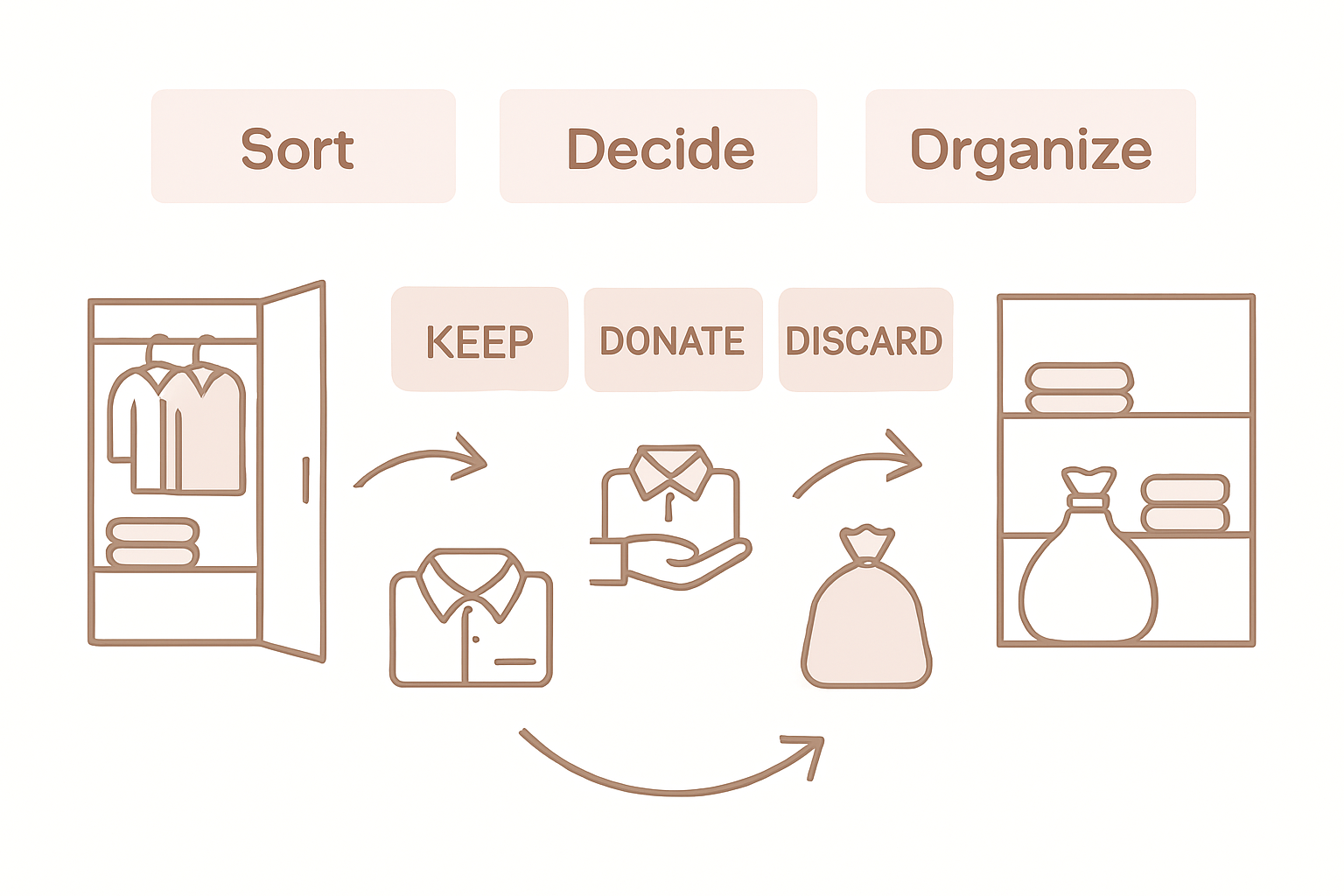
| 2. Sort Effectively | Empty your closet fully, then categorize items into keep, donate, or discard for clearer decisions. |
| 3. Be Honest with Yourself | Evaluate each item critically based on your current lifestyle and comfort, determining what to keep. |
| 4. Organize by Category and Season | Group clothes functionally and seasonally to streamline dressing and reduce decision fatigue. |
| 5. Regularly Review Your Space | Schedule periodic assessments of your closet to ensure it fits your evolving needs and style. |
Step 1: Set Your Decluttering Intention
Clearing out your closet starts with a powerful mental framework. Your intention becomes the guiding force that transforms a mundane organizing task into a meaningful personal journey. Research shows that establishing clear psychological intentions significantly impacts our ability to successfully adopt minimalist practices.
To set a genuine decluttering intention, start by asking yourself why you want to reorganize your space. Are you seeking more simplicity? Wanting to reduce daily stress? Craving a wardrobe that truly reflects your current lifestyle? These reflective questions help anchor your motivation. Psychological experts recommend breaking down your intention into manageable goals and realistic expectations.
Create a simple intention statement that resonates with you. For example: “I am creating a wardrobe that makes me feel confident and supports my daily life” or “I choose to surround myself only with clothing that brings me joy and serves a purpose.” Writing this down makes your intention tangible and serves as a north star during your decluttering process. Pro tip: Place this intention somewhere visible as a reminder of your commitment to creating a more intentional personal space.
Step 2: Empty and Sort Your Entire Closet
This is the moment where your decluttering journey transforms from intention to action. Completely emptying your closet might feel overwhelming, but systematic sorting techniques can help you approach this task with confidence and precision.
Start by removing every single item from your closet. Create three distinct piles: keep, donate, and discard. As you pull out each piece of clothing, ask yourself critical questions: When was the last time I wore this? Does it fit my current lifestyle? Does it make me feel amazing? Research on decluttering challenges suggests that this methodical approach helps reduce attachment to unnecessary items.
To make sorting more manageable, work in small sections and be brutally honest with yourself. Try on questionable items if needed. Pro tip: Take photos of outfits you are unsure about and review them later with a fresh perspective. This strategy helps create emotional distance and makes decision making easier. Your goal is a curated wardrobe that truly reflects who you are right now. As you build a minimalist wardrobe, remember that less truly can be more.
Step 3: Evaluate What to Keep or Let Go
Deciding which items to keep or discard is more than just a physical sorting process it’s an emotional journey of understanding your personal style and lifestyle. Cultural research on decluttering reveals that our clothing choices are deeply connected to our personal identity and memories.
To effectively evaluate your wardrobe, create a set of specific criteria. Ask yourself key questions: Does this item fit me right now? Have I worn it in the last year? Does it align with my current personal style? Consumer research on managing household disorder suggests that keeping only items that serve a clear purpose can significantly reduce mental clutter.
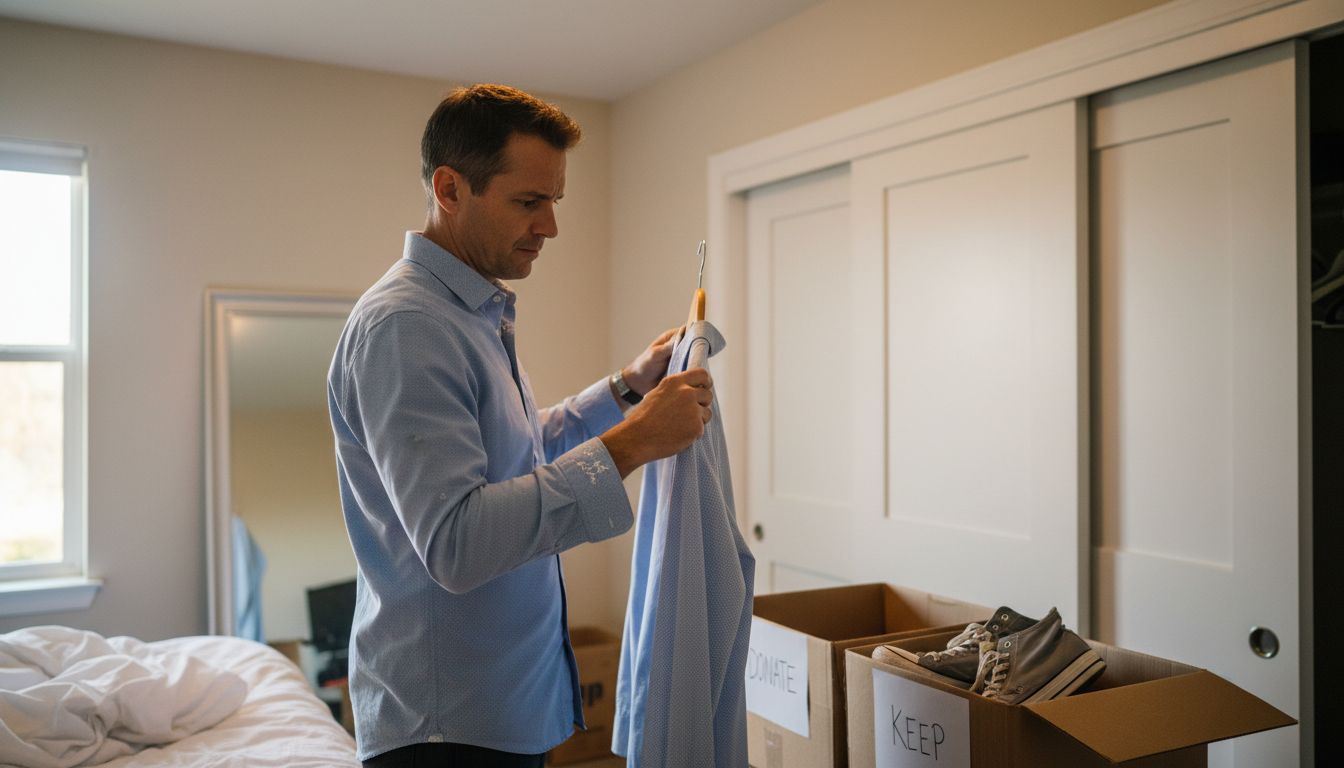
A practical approach is to try on questionable items and be radically honest. If something doesn’t make you feel confident or comfortable, it’s time to let it go. Consider creating a maybe box for items you are uncertain about store it away for a few months. If you don’t miss or need those pieces during that time, donate or sell them. As you build a minimalist wardrobe, remember that curating your closet is an ongoing process of self discovery and personal growth.
Step 4: Organize Clothes by Category and Season
Clothing categorization techniques can transform your closet from chaotic to streamlined. Organizing your wardrobe by both category and season will help you create a functional space that makes getting dressed a breeze and reduces daily decision fatigue.
Start by grouping your clothing into clear categories: tops, bottoms, dresses, outerwear, and accessories. Within each category, further subdivide by season winter, spring, summer, and fall. This approach allows you to quickly locate items and rotate your wardrobe as temperatures change. Research on home organization suggests that a well organized living space can significantly improve your sense of well being and personal comfort.
Pro tip: Use clear storage containers or garment bags for seasonal items you are not currently wearing. Label everything meticulously. Consider color coding or using matching hangers to create visual harmony. As you create your summer capsule wardrobe, remember that organization is not about perfection but about creating a system that works uniquely for you and makes getting dressed a joy rather than a chore.
Step 5: Style and Store Your Wardrobe with Love
Decluttering and organizing your wardrobe is more than just arranging clothes it is an act of self care and personal expression. Transform your closet into a space that reflects your unique style and brings you joy every time you open those doors.
Start by investing in quality storage solutions that protect and showcase your favorite pieces. Wooden hangers for structured items, soft padded hangers for delicate fabrics, and breathable garment bags for special occasion wear. Group similar colors together or arrange by outfit combinations to make getting dressed feel like a creative experience. Sustainable fashion research suggests that mindful wardrobe organization can actually reduce impulse shopping and promote more intentional consumption.
Pro tip: Create a mini mood board inside your closet or on the inside of a cabinet door to inspire your styling. Include photos of outfits you love, color palettes that speak to you, or personal style icons. As you discover your personal style, remember that your wardrobe is a reflection of your inner world treat it with the same love and attention you would give a treasured journal or meaningful photograph.
Step 6: Review Your Space for Completeness
Professional decluttering approaches suggest that a thorough space review is crucial for maintaining an organized closet. This final step is about ensuring your newly organized space truly serves your lifestyle and brings you joy.
Take a step back and look at your closet with fresh eyes. Are there any gaps in your wardrobe that need filling? Do you have versatile pieces that can create multiple outfits? Setting realistic organizational expectations means understanding that your wardrobe is a living system that will continually evolve. Consider taking photos of your newly organized space to track your progress and motivate future maintenance.
Pro tip: Schedule a quarterly review of your closet. This doesnt mean another full declutter just a quick assessment to ensure everything still fits your current lifestyle and personal style. As you explore versatile clothing pieces, remember that your wardrobe should feel like a reflection of who you are right now not who you were or who you might be someday.
Refresh Your Closet and Your Spirit with Be Juliet
Decluttering your closet is more than just organizing clothes it is about creating a wardrobe that supports your lifestyle and uplifts your confidence. If you are ready to embrace a fresh start by keeping only pieces that bring joy and reflect your true self Be Juliet offers thoughtfully designed collections that echo your personal journey. Our selection of Corsets / Bustiers blends timeless elegance with modern expression helping you make bold statements or enjoy subtle empowerment.
Start your transformation now and explore pieces that inspire self-expression while honoring comfort and authenticity. Visit Be Juliet today to find your next favorite garment and build a wardrobe that speaks the language of love and confidence. Embrace the joy of dressing with intention and take the first step toward your revitalized closet experience.
Frequently Asked Questions
How do I set my decluttering intention for my closet?
To set your decluttering intention, reflect on why you want to reorganize your space. Write a simple intention statement that resonates with you, such as “I am creating a wardrobe that makes me feel confident.” Keep this statement visible to remind you of your commitment throughout the decluttering process.
What are the best methods for sorting clothes when decluttering?
When sorting clothes, start by emptying your entire closet and create three distinct piles: keep, donate, and discard. Ask yourself critical questions about each item, such as when you last wore it or if it fits your current lifestyle, to help you make clear decisions.
How can I evaluate what clothes to keep or let go of?
To evaluate clothes, establish specific criteria based on your current personal style and lifestyle. Consider factors like fit and usage over the last year, and if an item doesn’t make you feel confident, it’s time to let it go.
What categories should I use to organize my closet?
Organize your closet by dividing clothing into categories such as tops, bottoms, dresses, outerwear, and accessories. Further subdivide these categories by season to make it easier to find what you need and adapt your wardrobe as the weather changes.
How do I store my clothing to maintain an organized closet?
Store your clothing in a way that not only protects it but also showcases your favorite pieces. Use quality storage solutions, like wooden hangers for structured items and labeled clear containers for seasonal clothes, to create an organized and visually appealing space.
How often should I review my closet after decluttering?
Schedule a quarterly review of your closet to assess your space and ensure everything still fits your current lifestyle. This quick assessment helps maintain your organized closet and allows you to identify any gaps that may need filling.
Recommended
- How to Keep Clothes Fresh Naturally Between Washes – Be Juliet
- Create Your Perfect Summer Capsule Wardrobe for Effortless Style – Be Juliet
- How to Build a Capsule Wardrobe: Minimalist Fashion Made Easy – Be Juliet
- Minimalist Summer Wardrobe: Simplifying Seasonal Style – Be Juliet
- 7 Essential Tips for Building Minimalist Wardrobe Essentials - Maker of Jacket