

How Fashion Boosts Self-Love: Your Style Guide
TL;DR:
- Fashion deeply influences self-love by shaping confidence and emotional well-being through intentional dressing. Wearing clothes that reflect your authentic self enhances social connection, optimism, and self-acceptance. Cultivating a wardrobe aligned with your true identity fosters lasting confidence and personal growth.
There is a quiet but powerful truth most people overlook: how fashion boosts self-love goes far deeper than picking a pretty outfit. The clothes you put on each morning shape your mood, your confidence, and the story you tell the world about who you are. Fashion is not vanity. It is one of the most personal, daily acts of self-expression you have. And when you get it right, when what you wear actually reflects who you are inside, something real shifts. This guide breaks down the psychology, the science, and the practical steps to make your wardrobe work for your well-being.
Table of Contents
- Key Takeaways
- How fashion boosts self-love through well-being
- The psychology behind dressing with intention
- Building a wardrobe that reflects your real self
- Personal style as a lifelong confidence practice
- My take on fashion as a self-love practice
- Shop styles that support your self-love
- FAQ
Key Takeaways
| Point | Details |
|---|---|
| Clothing satisfaction improves well-being | Women happy with their wardrobe report higher optimism and more social engagement. |
| Enclothed cognition is real | The symbolic meaning of what you wear directly influences your mood and self-perception. |
| Color choices affect your nervous system | Wearing red can increase sociability and reduce self-criticism in measurable ways. |
| Mindful curation beats trend-chasing | Choosing clothes that reflect who you are becoming supports lasting self-acceptance. |
| Fashion is daily self-care | Dressing with intention is a form of self-love, not a superficial habit. |
How fashion boosts self-love through well-being
The research here is more specific than most people realize. A study of 252 women aged 38 to 67 found that those satisfied with their clothing choices reported significantly better overall well-being, greater optimism, and higher levels of social engagement. This was not about spending more money on clothes. It was about feeling seen and represented by what they wore.
What makes this finding so striking is the flip side. Women who felt poorly served by their wardrobe, whether due to poor fit, limited options, or styles that did not match their identity, reported loneliness and social withdrawal as direct consequences. Fashion is not just about looking good. It is a tool for belonging.
“Fashion should be seen as a tool for connection and self-acceptance, not shallow vanity, especially during life transitions.” — Women’s Health Mag
Pro Tip: If you find yourself avoiding social events because you have “nothing to wear,” that is a signal worth taking seriously. Your wardrobe may not be reflecting the woman you actually are.
| Clothing Satisfaction Level | Well-being Outcome |
|---|---|
| High satisfaction | Increased optimism, social engagement, positive mood |
| Low satisfaction | Social withdrawal, loneliness, reduced confidence |
The psychology behind dressing with intention
One of the most fascinating concepts in fashion psychology is enclothed cognition. Research shows that labeled clothing affects cognitive performance and self-view at a measurable level. The classic example: participants who wore a doctor’s coat performed better on attention tasks than those who did not. The coat’s symbolic meaning transferred to the wearer’s mindset. Your clothes are doing this to you every single day, whether you are paying attention or not.
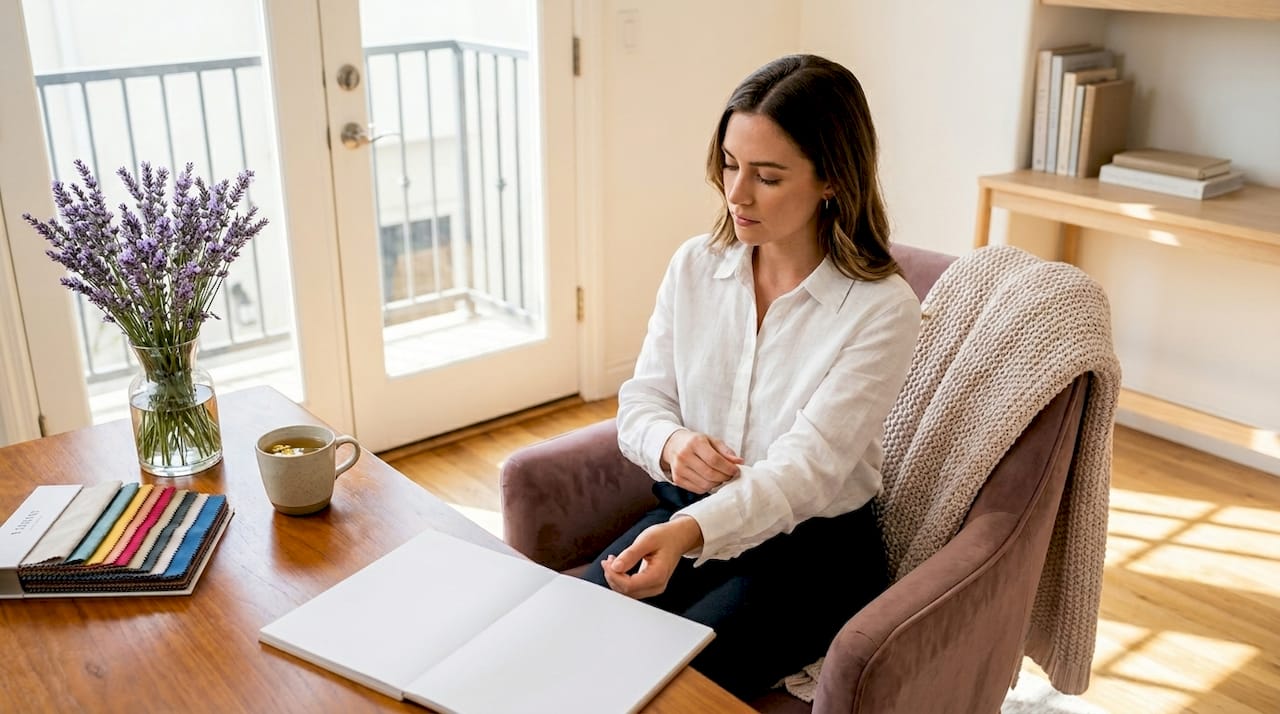
Color psychology takes this even further. Wearing red, for instance, activates the sympathetic nervous system, increasing sociability and actively reducing self-criticism. That is not a style opinion. That is biology. If you want to understand color psychology in fashion, it pays to treat your wardrobe like a toolkit, not just a collection.
Then there is the Proximity of Clothing to Self (PCS) scale, which measures the emotional significance you attach to the pieces in your closet. Clothes worn closer to your sense of self, those with real meaning to your identity, enhance identity connection and strengthen self-love. That is why your favorite worn-in sweater feels like armor on a hard day.
One counterintuitive finding worth knowing: oversized clothes can increase self-loathing cycles for some women, while form-fitting or compression garments can create calming effects through what practitioners call “deep touch pressure.” The goal is not to squeeze into anything uncomfortable. It is to choose fits that feel like a supportive hug rather than a hiding place.
Pro Tip: Next time you are getting dressed, ask yourself: “Does this reflect who I am, or who I am hiding from?” That one question will tell you everything.
Building a wardrobe that reflects your real self
Curating your wardrobe with intention is one of the most direct ways to practice style and self-acceptance. Here is how to approach it thoughtfully.
-
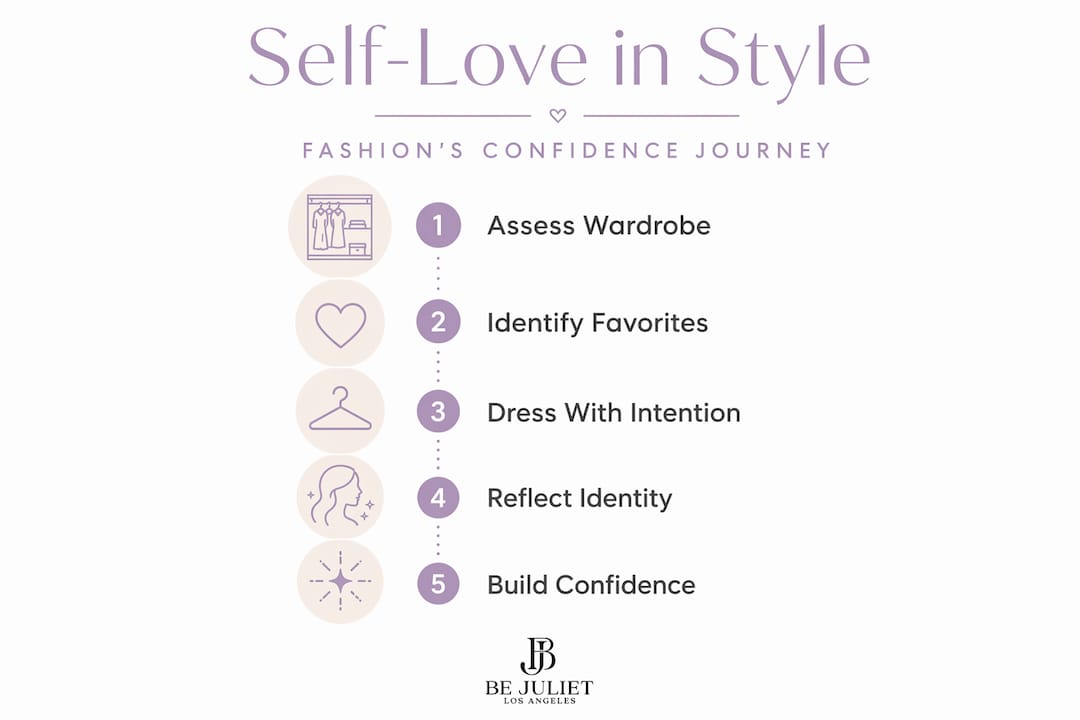
Ask the right question when decluttering. Instead of asking “Does this spark joy?” (which can keep you stuck in nostalgia), ask yourself if a garment “sparks possibility.” Does it represent the woman you are becoming? If not, let it go with love.
-
Dress for your actual life, not your aspirational one. If you own ten cocktail dresses but live in weekend markets and coffee shops, your closet is lying to you. Build around what you do and how you want to feel while doing it.
-
Invest in fit before you invest in labels. A well-fitting simple dress will do more for your confidence than an expensive piece that does not sit right. Fit is the single biggest factor in how clothing affects confidence.
-
Add one piece that feels a little brave. Not uncomfortable. Brave. A bold color, a silhouette you have not tried, a print that makes you smile. Small wardrobe refreshes like this build confidence over time without requiring a full overhaul or a big budget.
-
Track what you actually reach for. The pieces you grab first, week after week, are telling you who you really are. Use that data to guide future choices.
Pro Tip: Loving yourself through fashion does not mean buying more. It means buying smarter. One piece that genuinely reflects you will always outperform ten that do not.
Personal style as a lifelong confidence practice
Here is something the fashion industry does not say enough: your personal style is not fixed. It grows as you grow. Experts link comfortable, stylish clothes with positive body image and confidence across every decade of a woman’s life, from her twenties to her eighties. What changes is not the need to feel good in your clothes. It is what “good” means to you at each stage.
The key distinction between fashion for self-love and fashion as self-punishment is intention. Dressing to express who you are is self-love. Dressing to “fix” a body you have decided is wrong is not. True fashion confidence comes from accepting yourself first, then using style to express your inner truth, not to correct what you perceive as flaws.
- Dress for how you want to feel, not just how you want to be perceived.
- Choose fabrics and silhouettes that feel good physically, because physical comfort directly affects emotional ease.
- Let your style evolve. Holding onto an old aesthetic out of habit is the same as wearing a version of yourself that no longer fits.
You can explore more on fashion and self-identity to see how personal style connects to your deeper sense of self across different life stages.
My take on fashion as a self-love practice
I have watched women transform in fitting rooms. Not because of magic lighting (though good lighting helps), but because they finally put on something that matched who they actually were inside. That moment of recognition, “oh, that is me” is one of the most quietly powerful things I have ever witnessed in fashion.
What I have learned after years of watching this play out is that most women do not have a style problem. They have a self-permission problem. They are waiting to lose weight, waiting for the right occasion, waiting until they “deserve” the beautiful thing. Getting dressed with intention every morning, even in something simple, is a form of daily self-care and a small act of manifestation. You are telling yourself: I matter today. Right now. As I am.
The barriers are real. Budget, time, body changes, life transitions. But I have seen women rebuild their confidence with three pieces that actually fit and a willingness to stop waiting. Start there.
— Jason
Shop styles that support your self-love
At Bejuliet, every collection is designed with one woman in mind: you, exactly as you are right now. Whether you are rebuilding your wardrobe from scratch or adding a few pieces that spark that possibility feeling, Bejuliet makes it genuinely easy to dress with intention. Browse the clothing collection for styles that span bold and minimalist, cozy and polished. Add some shine with the jewelry collection, because the right accessory can shift a whole mood. And if you live in your pants (relatable), the pants collection has flattering, versatile cuts made for real life. Fashion should feel like freedom. Wear what tells your story.
FAQ
Can fashion actually improve self-love?
Yes. Research shows that women satisfied with their clothing choices report higher optimism, greater social engagement, and improved overall well-being. Dressing in ways that reflect your identity is a genuine confidence and self-esteem practice.
What is fashion confidence?
Fashion confidence is the feeling of alignment between who you are inside and how you present yourself through clothing. It is less about trends and more about wearing pieces that make you feel recognized and authentic.
How does clothing affect your mood?
Through a concept called enclothed cognition, the symbolic meaning of what you wear directly influences your mindset and behavior. Color choices also play a role, with shades like red shown to increase sociability and reduce self-criticism.
What does it mean to dress for self-love?
Dressing for self-love means choosing clothes that honor who you are right now, not who you think you should be. It focuses on fit, comfort, and personal expression rather than trends or external approval.
How do I start loving myself through fashion?
Start by asking whether each piece in your wardrobe “sparks possibility.” Remove what no longer reflects you, invest in fit over labels, and add one brave piece that makes you genuinely smile. Small, intentional changes build real confidence over time.