

Find your perfect bikini fit: why mixing sizes matters
TL;DR:
- Most women have different top and bottom sizes due to body shape diversity.
- Mix-and-match separates allow personalized fit, comfort, and confidence at the beach.
- Proper measurement, fabric choice, and adjustable features are key to perfect bikini fit.
You find a bikini set you love, try it on, and the top fits perfectly while the bottoms gap at the waist or dig into your hips. Sound familiar? Getting a good bikini fit is harder than it should be, because most women are naturally different sizes on top and bottom. Buying a matching set in one size almost always means compromising somewhere. This guide walks you through exactly why that happens, how to measure yourself correctly, and how mixing bikini sizes gives you the fit, comfort, and confidence you actually deserve at the beach or pool.
Table of Contents
- Understand why one-size-fits-all bikinis miss the mark
- What you need to get your perfect bikini fit
- How to mix tops and bottoms for your unique shape
- Troubleshooting: common mistakes and solutions
- Why mixing bikini sizes is about empowerment, not just fit
- Find your perfect swimwear match with Be Juliet
- Frequently asked questions
Key Takeaways
| Point | Details |
|---|---|
| Bodies aren't uniform | Most women have different measurements for bust, waist, and hips, so bikinis in matching sizes rarely fit perfectly. |
| Mixing sizes boosts confidence | Choosing separate top and bottom sizes gives a better fit, more comfort, and shows off your unique style. |
| Smart shopping matters | Take your exact measurements, use detailed brand charts, and prioritize comfort and return policies over label numbers. |
| Troubleshooting is normal | If an item isn't quite right, use adjustable features and flexible brands to address fit challenges. |
Understand why one-size-fits-all bikinis miss the mark
Here is the honest truth: standard bikini sizing was never designed with your actual body in mind. It was built around the idea of a “uniform” woman, one whose bust, waist, and hips all fall neatly into the same size bracket. That woman is rare. Real bodies are wonderfully varied, and the numbers back that up.
Body shape data from SizeUSA shows that women’s proportions cluster into distinct categories: the Triangle (wider hips, moderate bust), the Rectangle (similar measurements throughout), and the Inverted Triangle (fuller bust and upper body). Bust measurements also vary significantly by ethnicity and BMI, confirming that a single size simply cannot serve the full spectrum of women’s bodies.
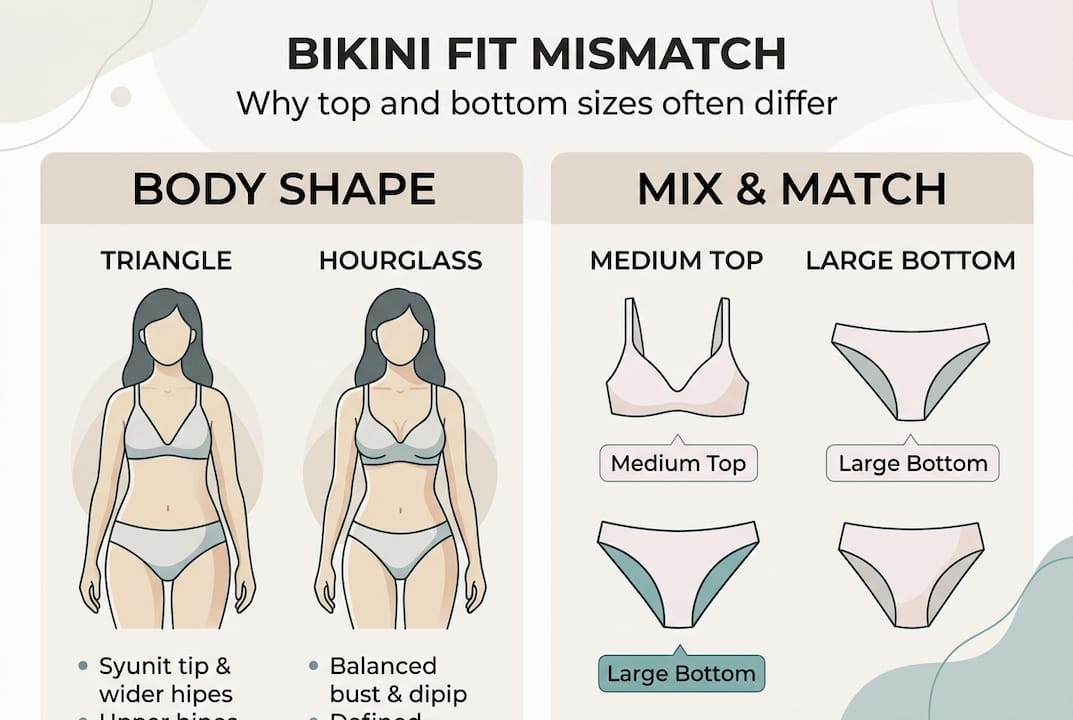
What does this mean for you in practice? If you are a Triangle shape, you might need a medium top but a large bottom. If you lean Inverted Triangle, a large top with a small bottom is completely normal. Buying a matching set forces you to pick one size and accept that one piece will not fit well. The result is sagging bottoms, a top that digs in, or straps that pull uncomfortably.
The good news is that the swimwear industry has been shifting. More brands now sell bikini styles for every body as separates, letting you choose your top and bottom independently. This is not a niche trend. It is a direct response to the reality that most women need different sizes for different parts of their body.
| Body shape | Common top size | Common bottom size |
|---|---|---|
| Triangle (pear) | S or M | M or L |
| Inverted triangle | L or XL | S or M |
| Rectangle (athletic) | M | M |
| Full figure (curvy) | L or XL | L or XL |
The most common combinations women actually wear are a small top with a medium bottom, or a medium top with a large bottom. If you have been squeezing into a matching set and wondering why it never feels quite right, this is why.
What you need to get your perfect bikini fit
Knowing the reasons one-size sets fail, let’s set you up for success with what you actually need before you shop.
Start with your measurements. You need four numbers: bust, underbust, waist, and hips. Use a soft measuring tape and measure each spot at its fullest point. For your bust, wrap the tape around the fullest part of your chest. For hips, measure around the widest part, usually about 8 inches below your natural waist. Write these numbers down. They are your shopping foundation.
Once you have your measurements, prioritize brands with detailed size charts and generous return policies. Focus on function over the number on the tag. A size L that fits perfectly is always better than a size M that pinches.
Here is a simple sizing cheat sheet for the Harriet Patchwork Bikini by Be Juliet:
| Size | Bust | Hips |
|---|---|---|
| S | 32 to 34 in | 34 to 36 in |
| M | 34 to 36 in | 36 to 38 in |
| L | 36 to 38 in | 38 to 40 in |
| XL | 38 to 40 in | 40 to 42 in |
The Harriet runs snug, so if you are between sizes, size up. It is a simple rule that saves you a return trip.
Also think about fabric. Stretchy blends with spandex or recycled nylon move with your body and hold their shape wash after wash. If you are shopping for a perfect swimsuit for your body type, fabric stretch matters just as much as the size on the label. And when exploring tops specifically, knowing the types of bikini tops available helps you match support style to your shape.
Pro Tip: Measure yourself at the end of the day when your body is at its most relaxed. Morning measurements can read slightly smaller and lead you to size down when you should not.
How to mix tops and bottoms for your unique shape
With your preparation done, let’s walk through the process of pairing different sizes for your best look and feel.
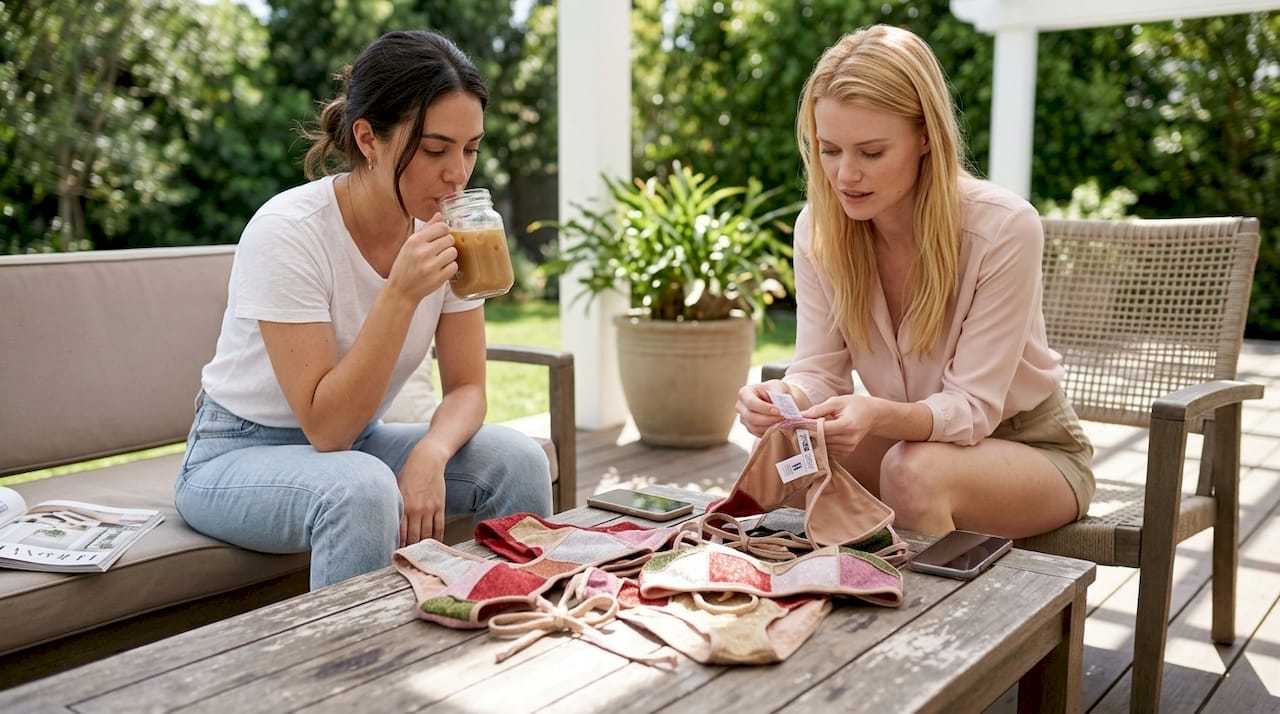
Mix-and-match separates let you size your top based on bust and underbust measurements (similar to bra sizing) and your bottom based on waist and hip measurements. This is the key shift in thinking. Your top size and bottom size are two separate decisions.
Here is how to approach it step by step:
- Measure your bust and compare it to the brand’s top size chart.
- Measure your hips and compare to the bottom size chart.
- Select each piece independently based on those two measurements.
- If you fall between sizes on either piece, size up for comfort.
For specific body shapes, the approach gets even more personalized. If you have a pear shape, you will likely want a smaller top and a fuller bottom with more coverage. Our guide on pear body shape bikini tips walks through the best styles in detail. If you have a fuller bust, underwire or structured tops give you the support you need, and our roundup of bikini tops for large breasts covers exactly what to look for.
Adjustable features are your best friend here. Tie sides on bottoms let you customize the fit around your hips without sizing up entirely. Adjustable straps on tops let you dial in support. These details make a real difference, especially when you are between sizes.
Mixing colors and prints is also part of the fun. You do not have to match your top and bottom perfectly. Pairing a solid bottom with a printed top, or mixing two coordinating prints, is a stylish move that also gives you more flexibility to find the best bikini type for your body without being locked into a set.
Pro Tip: When in doubt between two bottom sizes, go with the larger one. You can always tie it tighter, but you cannot add fabric where there is none.
Troubleshooting: common mistakes and solutions
Even savvy shoppers can run into challenges, so let’s address how to fix common and advanced fit issues.
One of the biggest mistakes is ignoring fabric stretch. A recent fit study found that 60% of women wear the wrong bottom size because outdated sizing rules do not account for modern stretch fabrics and body diversity. Proper fit prevents riding up, digging in, and poor support. If your bottoms roll down or cut into your hips, the size is likely off, not your body.
Another common mistake is sticking to the label size you have always worn. Sizing varies between brands. A medium at one brand can fit like a large at another. Always go back to your measurements, not your memory.
3D simulation research shows that pressure from swimwear varies significantly by body type and movement. Apple shapes, for example, experience the highest pressure around the abdomen, which means a snug waistband on bottoms can feel uncomfortable fast. Choosing high-waisted styles or softer waistbands makes a real difference for comfort during activity.
Here are a few specific scenarios and what to do:
- Fuller busts: Go up a cup or look for underwire tops with a smaller band. Check out our guide on types of bikini bottoms to pair the right bottom silhouette.
- Apple shapes: High-waisted bottoms with stretch panels offer more comfort and coverage. Our post on swimsuit for apple-shaped body has detailed style advice.
- Expecting or postpartum: Your proportions shift, sometimes quickly. Tie styles and adjustable pieces let you adapt without buying a whole new set every few weeks.
- Active swimming: Size your top snugger for support during movement, and choose bottoms with a little more room for comfort when kicking.
Real women are talking about this too — a recent thread in r/femalefashionadvice had customers sharing their experience mixing Be Juliet sizes to get the fit right, which is exactly what this guide is designed to help with.
“Fit is not about the number. It is about how the fabric moves with your body, supports where you need it, and stays put when you do.”
When in doubt, use a brand’s return or exchange policy. It exists for exactly this reason.
Why mixing bikini sizes is about empowerment, not just fit
Here is something worth saying out loud: choosing different sizes for your top and bottom is not a workaround. It is the smarter, more honest approach to dressing your actual body.
For too long, the idea of wearing a “size” has carried emotional weight it never deserved. A tag is a production tool, not a verdict on your shape. When you reject the same-size mentality and shop for fit instead, you are doing something quietly powerful. You are saying your body is the standard, not the other way around.
Mix-and-match sizing is also a more sustainable way to shop. When both pieces fit well, you wear them more, wash them less frantically, and replace them less often. That is better for your wardrobe and better for the planet.
The women who feel most confident in their swimwear are not the ones who fit a standard size. They are the ones who stopped trying to fit the size and started making the size fit them. That shift in perspective changes everything.
Find your perfect swimwear match with Be Juliet
Ready to put this into practice? At Be Juliet, we design swimwear around real measurements, not the idea of a “standard” woman. Our mix-and-match separates let you pick your top and bottom independently so you get a bikini fit that actually works for your body, not the compromise the tag suggests.
The Harriet Patchwork Bikini is a great place to start. It’s designed to be sized separately, runs snug (size up if you’re between sizes), and comes in S through XL. Use the sizing cheat sheet above, grab your tape measure, and find the combination that feels like it was made for you. Because getting your bikini fit right the first time? That’s the whole point.
Frequently asked questions
Why don’t most women fit into a matching bikini set?
Most women’s bust, waist, and hip measurements are naturally different, making uniform-size sets unlikely to fit both top and bottom well. Body shape research confirms that proportions cluster into distinct types that standard sizing simply cannot serve.
How do I know if my bikini fits correctly?
A well-fitting bikini stays in place, offers comfort and support, and does not pinch, dig in, or sag when you move. Proper fit means no riding up, no digging, and no pulling at the straps.
What if my measurements change during the year?
Opt for adjustable or tie bikinis and brands with flexible return policies so you can swap sizes as your body changes. Adjustable features like tie sides and sliding straps make it easy to adapt without buying a whole new set.
Why do some brands still sell only matching sets?
Some brands stick with traditional sizing for simplicity, but mix-and-match separates have become the industry standard for personalization across diverse body types, especially for women aged 18 to 35.
Are there eco-friendly bikini fabrics that affect fit?
Yes, recycled nylon and spandex blends hold their shape better wash after wash, making precise sizing even more important. Sustainable fabrics retain their structure longer, so a well-fitted piece stays well-fitted through the whole season.
Recommended
- Find Your Perfect Match: What Type of Bikini is Best for Your Body – Be Juliet
- Comprehensive Guide to Different Types of Bikini Tops – Be Juliet
- Flattering bikini styles for every body: confidence at every age – Be Juliet
- Bikini Bottom Types: Cheeky, Brazilian, High-Waisted & More – Be Juliet
- Guide Tailles Soutien-Gorge : Bien-Être et Confiance – Valetta.fr