
Fashion and Body Positivity: Style Every Body With Confidence
TL;DR:
- Fashion and body positivity promote celebrating all body types through inclusive clothing and empowering narratives that foster self-love. Authentic brands invest in genuine fit engineering and consistent messaging, which significantly boost confidence and body satisfaction. True inclusivity relies on systemic design changes, not just marketing campaigns, ensuring clothing fits and feels good for every body.
Fashion and body positivity is the practice of celebrating all body shapes and sizes through inclusive clothing choices and empowering style narratives that build genuine self-love and confidence. The body positivity movement, as it is formally known in cultural and psychological research, has reshaped how brands design, market, and represent clothing for all bodies. Brands like Savage X Fenty, Universal Standard, and Torrid have pushed the conversation from runway symbolism into real wardrobe decisions. A 2026 Frontiers in Psychology study confirms that body-positive advertising significantly increases mood, body satisfaction, and body appreciation among young women. That is not a soft benefit. That is fashion doing something genuinely powerful for the person wearing it.
How fashion and body positivity challenge traditional beauty ideals
The fashion industry has expanded its visual range, but the core body ideal has barely moved. A 25-year analysis of fashion imagery covering 793,199 images by DTU and WU Vienna found that while model body size variation has increased from 2000 to 2024, the central normative body ideal remains stable. Plus-size models still appear below the average U.S. body size. More faces and figures are visible, but the aspirational standard at the center has not shifted. That gap matters for anyone trying to find themselves in fashion.
The same research reveals that increased diversity is often intersectional in a complicated way. Plus-size models are more likely to be non-White, meaning size diversity and racial diversity are bundled together at the margins rather than distributed evenly across the full spectrum of representation. High-prestige brands still concentrate their core campaigns around a narrow body range, treating diversity as an accent rather than a foundation. For shoppers, this means reading brand values carefully rather than trusting surface-level campaign imagery.
Pro Tip: When evaluating whether a brand genuinely practices inclusive fashion, check whether their full clothing range, not just a capsule collection, is available across all sizes. Tokenism lives in limited-edition drops. Real inclusion lives in the main catalog.
| Representation type | What it actually signals |
|---|---|
| Campaign diversity only | Marketing inclusion without design investment |
| Extended size range across all styles | Genuine commitment to fashion for all bodies |
| Plus-size-specific blocks and grading | Technical investment in fit and comfort |
| Intersectional casting across full range | Systemic shift, not margin inclusion |
What does body-positive fashion do for your confidence?
Body-positive advertising works through three specific psychological mechanisms: mood improvement, body appreciation, and reduced self-objectification. The Frontiers in Psychology research compared brand-posted body-positive ads against ideal beauty posts and neutral content, and the body-positive group consistently showed better emotional outcomes. This means the framing of a fashion message matters just as much as who is in the photo.
A 2026 qualitative study on Instagram branding found that plus-size fashion content enhances confidence and emotional well-being through three qualities: dignity, visibility, and authenticity. Yet the same study noted that internalized beauty norms can persist even when women feel seen by a brand. Representation alone does not undo years of narrow messaging. The brand narrative has to actively reinforce empowerment, not just show a wider range of bodies.
“Clothing that genuinely fits and flatters plus-size bodies enhances confidence, but internalized standards remain a challenge requiring brand narratives emphasizing empowerment.” — Digital Embodiment and Body Positivity, 2026
Social media plays a specific role here. When brands post body-positive content consistently rather than seasonally, the cumulative effect on self-image is stronger. Authenticity is the deciding factor. A brand that posts one body-positive campaign in January and returns to narrow ideals by March signals to its audience exactly where its priorities sit.
Design essentials that make inclusive fashion actually work
True body acceptance in fashion is an engineering problem before it is a style problem. High-end plus-size clothing requires specialized grading with adjusted grade breaks and increments to maintain the intended silhouette across sizes. Simply scaling a size 8 pattern up to a size 20 creates distorted proportions: baggy sleeves, tight waistbands, and armholes that restrict movement. That is not inclusive design. That is a shortcut dressed up as inclusion.
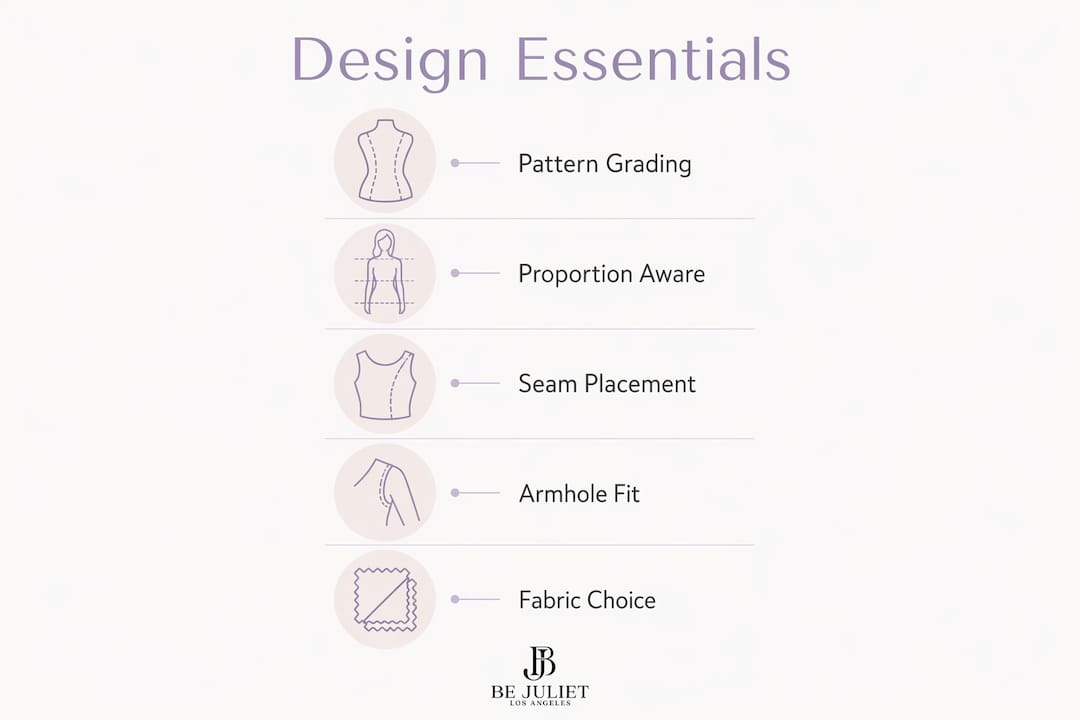
Premium plus-size construction focuses on seam placement, balanced armholes, and rise adjustments that support mobility and comfort. These details distinguish a garment that genuinely fits from one that technically closes. Wrap dresses, for example, work across body types because the tie closure adjusts to the wearer rather than demanding the wearer adjust to the garment. Stretchy knit sets with a high-rise waistband and a relaxed leg offer the same logic: the construction serves the body, not the other way around.
Here is what to look for when shopping for truly body-positive pieces:
- Proportion-aware cuts. Look for styles where the waist, hip, and bust proportions are designed for your size range, not scaled from a smaller block.
- Functional seam placement. Side seams should sit at the true side of the body, not rotate forward due to poor grading.
- Rise and inseam options. Pants and skirts with multiple rise options signal that a brand has invested in fit architecture.
- Stretch with structure. Fabrics that stretch without losing shape, like ponte or ribbed knit, support silhouette without restriction.
- Adaptive details. Inclusive fashion that addresses mobility and practical needs supports dignity and attractive self-presentation at the same time.
Pro Tip: When trying on a new brand, check the armhole first. If it pulls across the back or restricts your arm when you reach forward, the pattern was not graded for your body. Move on.
How to embrace body-positive style in your everyday wardrobe
Self-love and style are not separate conversations. The clothes you choose every morning send a message to yourself before anyone else sees them. Building a wardrobe that reflects body acceptance starts with a few clear decisions.
Start by auditing your current closet for pieces that fit your body now, not a version of your body you are working toward. Clothes that are too tight, too loose, or simply uncomfortable create daily friction that chips away at confidence. Donate them without guilt. Your wardrobe should be your ally.
When identifying brands that genuinely embody body positivity, look beyond the campaign. Check whether their plus-size fashion tips and styling guidance reflect real knowledge of fit and proportion, or whether they simply show larger bodies in the same cuts marketed to smaller ones. Brands that publish detailed fit guides, offer extended size ranges in every style, and use models across the full size spectrum in their main collections are the ones worth your loyalty.
Trend awareness and personal comfort are not opposites. You can wear the season’s color story in a silhouette that works for your body. You can follow a print trend in a fabric weight that flatters your frame. Fashion for all bodies is not about dressing differently from trends. It is about choosing how trends show up on your body, on your terms. Reading about body-positive fashion confidence can help you reframe style as a form of personal storytelling rather than a performance for others.
Key takeaways
Fashion and body positivity creates real psychological and physical benefits only when brands invest in both authentic messaging and genuine fit engineering across all sizes.
| Point | Details |
|---|---|
| Industry representation gap | Body size diversity in fashion imagery has grown, but the central beauty ideal remains narrow and stable. |
| Psychological impact is real | Body-positive ads measurably improve mood, body satisfaction, and reduce self-objectification in young women. |
| Fit engineering matters | True inclusive fashion requires specialized grading and construction, not scaled-up patterns. |
| Authenticity over campaigns | Consistent brand messaging builds confidence; seasonal diversity campaigns do not. |
| Style is self-expression | Building a wardrobe around your current body, not an aspirational one, is the foundation of body-positive dressing. |
Why I think the “inclusive fashion” conversation is still missing the point
I have spent years watching brands celebrate body positivity in their campaigns while quietly keeping their most desirable silhouettes in a narrow size range. The conversation has gotten louder, but the closets have not always gotten more honest. What I have found actually works is simpler than any campaign: clothes that fit correctly, in fabrics that feel good, in silhouettes that reflect who you are today. That combination does more for confidence than any brand manifesto.
The psychological research backs this up. Mood and body appreciation improve when the messaging is genuine and the framing is positive, not just when a larger body appears in a photo. Authenticity is the variable that changes outcomes. For you as a shopper, that means trusting your own experience in the fitting room over what a brand tells you about itself. If a garment makes you feel good in your body right now, that is the only metric that matters. Fashion should feel like freedom. Wear what tells your story.
— Jason
Shop body-positive styles at Bejuliet
Bejuliet designs clothing that starts with your body, not a scaled-down ideal. From curve-hugging knit sets to flowy wrap silhouettes and breathable luxury fabrics, every piece in the Bejuliet clothing collection is built to celebrate the body you are in today. The brand’s loungewear line is a particular standout for everyday body-positive dressing. The Everleigh Loungewear Set combines cotton comfort with a flattering three-piece construction that works across body types without compromising on style. For days when comfort is the whole point, explore the full loungewear collection and find pieces that feel as good as they look.
FAQ
What is the body positivity movement in fashion?
The body positivity movement in fashion is a cultural and design shift that advocates for representation, inclusive sizing, and empowering messaging across all body types. It challenges narrow beauty ideals by promoting dignity, visibility, and authentic self-expression through clothing.
Does body-positive fashion actually improve confidence?
Yes. A 2026 Frontiers in Psychology study found that exposure to body-positive brand advertising significantly increases mood, body satisfaction, and body appreciation while reducing self-objectification in young women.
What makes plus-size fashion truly inclusive?
Truly inclusive plus-size fashion uses specialized pattern grading with adjusted grade breaks, proportion-aware seam placement, and rise options designed for larger bodies. Scaling up a smaller pattern without these adjustments produces poor fit and discomfort.
How do I find brands that genuinely support body acceptance?
Look for brands that offer their full style range across all sizes, publish detailed fit guides, and use models across the complete size spectrum in their main collections, not just in dedicated plus-size campaigns.
Can I follow fashion trends and still dress for my body?
Absolutely. Trend awareness and personal comfort work together when you choose how a trend shows up on your body. Selecting the right silhouette, fabric weight, and proportion for your frame lets you engage with any trend on your own terms.