
1930s Women's Summer Fashion: Complete Guide
Nearly every american woman in the 1930s faced a unique fashion challenge as summer brought both soaring temperatures and economic hardship. Despite the tight budgets of the Great Depression, they found creative ways to look polished and feel comfortable. With the rise of lightweight fabrics and iconic bias-cut dresses, this era set the stage for a style revolution that still inspires trends today. Discover how resilience and elegance defined a decade’s approach to summer fashion.
Table of Contents
- Defining 1930s Women’s Summer Fashion
- Popular Fabrics And Materials Used
- Iconic Silhouettes And Signature Styles
- Key Trends And Influences Of The Era
- Accessorizing 1930s Summer Outfits
- Modern Takes On Vintage Summer Looks
Key Takeaways
| Point | Details |
|---|---|
| Influence of Fabric Choices | 1930s summer fashion utilized lightweight fabrics like cotton and rayon, providing comfort and affordability during the Great Depression while showcasing feminine designs. |
| Evolution of Silhouettes | The decade marked a shift from boyish styles to body-conscious silhouettes, featuring designs that highlighted natural waistlines and curves, promoting feminine elegance. |
| Importance of Accessories | Accessories such as wide-brimmed hats and streamlined footwear played vital roles in enhancing outfits, allowing women to express personal style and social status creatively. |
| Modern Interpretations | Contemporary fashion incorporates 1930s elements through a balance of vintage aesthetics and modern materials, allowing for sustainable and adaptable style choices today. |
Defining 1930s Women’s Summer Fashion
The 1930s was a transformative decade for women’s fashion, bridging the gap between the loose, boyish styles of the 1920s and the more structured silhouettes that would emerge during World War II. Summer fashion during this era reflected both economic challenges of the Great Depression and a growing sense of feminine sophistication.
Hemlines and Silhouettes were a critical aspect of 1930s summer style. Unlike the straight, shapeless dresses of the previous decade, 1930s summer fashion embraced a more feminine, body-conscious design. Dresses began to highlight natural waistlines, often featuring gentle gathering or soft pleats that created gentle curves. The bias cut, popularized by designers like Madeleine Vionnet, allowed fabrics to drape elegantly, creating a sleek and sensual line that moved beautifully.
Fabric choices were pragmatic yet stylish. Light, breathable materials like cotton, linen, and rayon became summer staples. Women often chose printed cotton dresses with small floral patterns or geometric designs that provided both visual interest and practical comfort. Summer Fabric Guide reveals how these textiles were not just about appearance, but also about creating wearable, versatile pieces that could transition from daytime activities to evening social events.
Accessories played a crucial role in completing 1930s summer looks. Wide-brimmed sun hats, often adorned with ribbons or artificial flowers, protected women from the sun while adding a touch of elegance. Gloves remained a standard accessory, with shorter, lightweight versions perfect for summer occasions. Shoes transitioned from the chunky styles of the 1920s to more streamlined designs - peep-toe heels and delicate sandals became increasingly popular, reflecting the era’s growing appreciation for feminine footwear.
While economic constraints of the Great Depression influenced fashion choices, women of the 1930s demonstrated remarkable creativity and resilience in their styling. Summer wardrobes became a canvas for expressing personal style, mixing practicality with an emerging sense of glamour that would define the decade’s aesthetic.
Popular Fabrics and Materials Used
The 1930s marked a revolutionary period in textile manufacturing, with women’s summer fashion embracing innovative fabrics that balanced practicality, affordability, and style. During this era, textile technology advanced rapidly, offering women more diverse and accessible clothing materials than ever before.
Cotton emerged as the quintessential summer fabric, prized for its breathability and comfort. Lightweight cotton voiles, crisp cotton broadcloths, and soft cotton lawns dominated summer wardrobes. These fabrics were particularly appealing during the Great Depression, as they were relatively inexpensive and could be easily laundered at home.
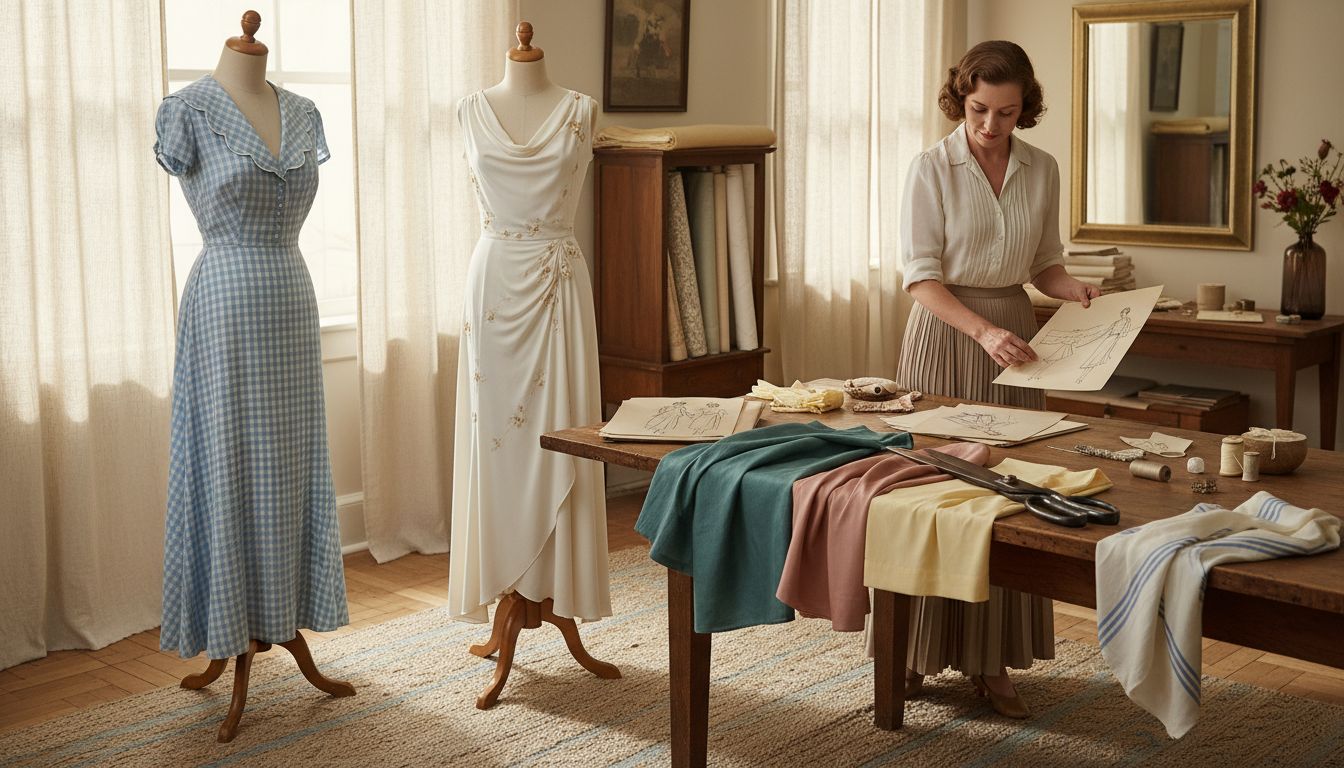 How to Choose Fabrics for Timeless, Joyful Style highlights how selecting the right fabric can transform a garment’s entire aesthetic and wearability.
Rayon, a revolutionary synthetic fabric introduced in the late 1920s, became increasingly popular in 1930s summer fashion. Often called “artificial silk,” rayon offered a more affordable alternative to silk, with a similar draping quality and luxurious sheen. It could mimic the appearance of more expensive fabrics while being more accessible to women across different economic backgrounds. Printed rayon dresses with vibrant geometric patterns or delicate floral designs became summer staples, allowing women to express creativity and personal style without significant financial investment.
Linen represented another crucial fabric in 1930s summer wardrobes. Known for its exceptional cooling properties and crisp texture, linen was particularly favored for tailored suits, day dresses, and casual separates. The fabric’s natural wrinkles became part of its charm, reflecting a more relaxed approach to summer dressing. Lightweight linen blends allowed for structured garments that remained comfortable in warm weather, embodying the decade’s aesthetic of refined yet practical elegance.
The decade’s fabric innovations weren’t just about aesthetics - they represented a broader social transformation. As women navigated economic challenges and changing social roles, these textiles provided both literal and metaphorical flexibility. Summer fashion became a canvas for expressing resilience, creativity, and an emerging sense of personal freedom.
Iconic Silhouettes and Signature Styles
The 1930s represented a transformative period in women’s fashion, where silhouettes evolved dramatically from the boyish lines of the 1920s to a more sophisticated, feminine aesthetic. This decade marked a renaissance in clothing design that celebrated the female form while introducing bold architectural elements.
According to Wikipedia, designer Madeleine Vionnet revolutionized fashion by moving away from stiff, formalized clothing toward sleeker, softer styles. Her groundbreaking bias cut technique allowed fabrics to cling naturally to a woman’s body, creating fluid lines that celebrated natural curves without restrictive undergarments. These designs drew inspiration from ancient Greek art, with garments seemingly floating around the body in elegant, unstructured forms.
Shoulder architecture became another defining characteristic of 1930s fashion. Research on shoulder pads) reveals that designers Elsa Schiaparelli and Marcel Rochas introduced dramatic shoulder treatments in 1931, influenced by Southeast Asian ceremonial dress. Broad, padded shoulders created a powerful silhouette that emphasized strength and confidence, transforming women’s fashion from delicate and constrained to bold and dynamic. What is a Signature Look? illustrates how these distinctive design elements helped women express individual personality through clothing.
Day dresses typically featured cinched waists, often accentuated with belts or subtle gathering, creating an hourglass shape that contrasted with the previous decade’s straight, boyish lines. Evening gowns embraced glamorous, floor-skimming designs with dramatic backs, cowl necklines, and intricate detailing that highlighted feminine elegance. The overall aesthetic balanced practicality with romance - reflecting the complex social and economic landscape of the era.
These iconic silhouettes were more than mere fashion statements. They represented women’s emerging social mobility, artistic expression, and a growing sense of personal empowerment during a challenging historical moment.
Key Trends and Influences of the Era
The 1930s summer fashion landscape was a dynamic reflection of profound social, economic, and cultural shifts. Against the backdrop of the Great Depression, women’s fashion became a powerful medium of self-expression, resilience, and adaptation, transforming clothing from mere necessity to a form of personal storytelling.
Swimwear and Beach Fashion underwent remarkable transformations during this period. According to Wikipedia research, by 1935, American designer Claire McCardell was already experimenting with innovative swimsuit designs, cutting out side panels of traditional maillot-style suits. The 1938 invention of the Telescopic Watersuit in shirred elastic cotton marked a significant departure from heavy wool swimwear. Cotton sun-tops printed with playful palm trees and silk or rayon pajamas with blouse tops became increasingly popular by 1939, signaling a shift towards more comfortable and stylish beachwear.
Sports and Leisure Wear reflected a growing emphasis on practical yet sophisticated clothing. Historical fashion documentation reveals designers like Vera Borea creating innovative sports ensembles that balanced functionality with aesthetic appeal. Her 1932 designs featured high-waisted skirts with waist-length jackets made of thick woolly tricot, paired with ‘open work’ sweaters. Day skirts maintained hemlines eight to ten inches from the ground, utilizing rough, open-surfaced materials like cotton and wool. Fashion Through the Decades illustrates how these trends represented more than just clothing - they were statements of women’s expanding social roles and increasing independence.
The decade’s fashion trends were deeply intertwined with the era’s socioeconomic context. Hollywood’s golden age significantly influenced summer style, with movie stars like Ginger Rogers and Jean Harlow setting glamorous yet attainable fashion standards. Women used clothing as a form of visual storytelling, creating looks that communicated resilience, creativity, and hope during challenging economic times.
Ultimately, 1930s summer fashion was a testament to women’s adaptability - transforming limited resources into expressions of personal style, dignity, and quiet rebellion.
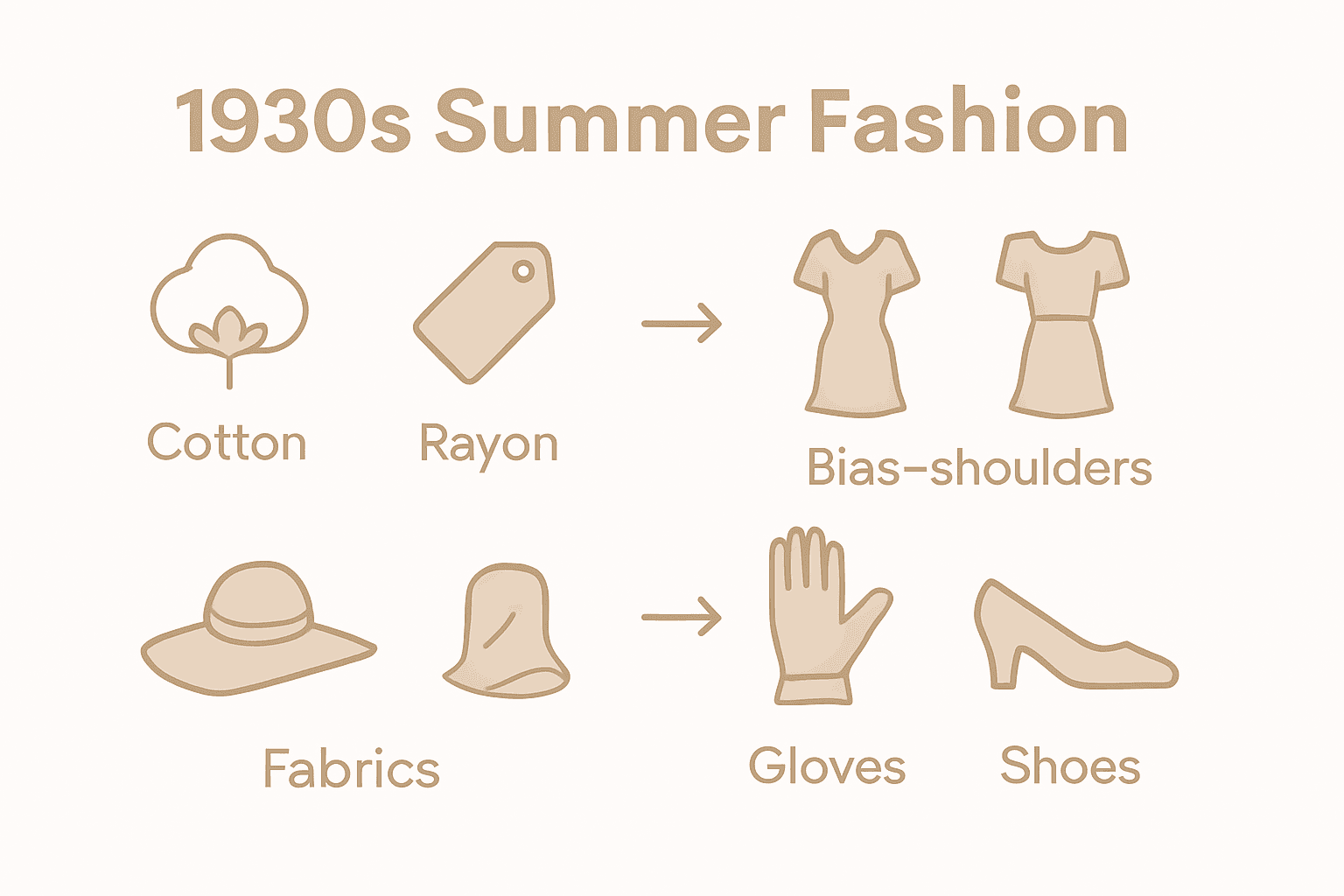
Accessorizing 1930s Summer Outfits
Accessories in the 1930s were far more than decorative additions - they were powerful statements of personal style, social status, and feminine sophistication. During this transformative decade, women used accessories as strategic tools for self-expression, carefully curating each element of their summer ensemble with remarkable intention.
Headwear represented a crucial component of 1930s summer styling. Wide-brimmed sun hats crafted from lightweight straw or fine cotton became essential, often adorned with delicate silk ribbons, artificial flowers, or subtle geometric trimmings. These hats served dual purposes - protecting women from harsh summer sunlight while making bold fashion statements. How to Accessorize Outfits emphasizes that thoughtful accessorizing can elevate even the simplest summer dress into a sophisticated ensemble.
Gloves and Jewelry played sophisticated roles in completing 1930s summer looks. Daytime gloves typically reached just above the wrist, crafted from lightweight cotton or fine mesh in soft pastels or crisp white. Art Deco influenced jewelry designs featured geometric shapes, clean lines, and bold color combinations. Bakelite bangles in vibrant colors like cherry red and butterscotch yellow became signature accessories, while long pendant necklaces and clip-on earrings added dramatic flair to summer dresses. Costume jewelry emerged as a democratizing fashion trend, allowing women across economic backgrounds to experiment with glamorous styling.
Footwear underwent significant transformations during this era. Shoes transitioned from chunky 1920s designs to more streamlined, feminine silhouettes. Peep-toe pumps with modest heels, often in neutral tones like beige and white, became summer staples. Strappy sandals with delicate ankle straps offered a more relaxed option for casual summer events. Women frequently coordinated their shoes with handbags, creating cohesive looks that reflected the decade’s growing emphasis on coordinated, intentional styling.
The art of 1930s accessorizing was fundamentally about storytelling - each carefully chosen piece spoke to personal identity, cultural influences, and the wearer’s unique sense of style.
Modern Takes on Vintage Summer Looks
Reinterpreting 1930s summer fashion for the contemporary wardrobe requires a delicate balance of historical reverence and modern sensibility. Today’s fashion enthusiasts are reimagining vintage aesthetics not as costume pieces, but as sophisticated, adaptable style statements that celebrate feminine strength and individual creativity.
Silhouette Translation becomes key when modernizing 1930s looks. Contemporary designers are embracing the decade’s signature bias cut and cinched waistlines through contemporary fabrics and more relaxed fits. A bias cut midi dress in lightweight linen, paired with sleek leather sandals and minimalist jewelry, transforms a historical silhouette into a thoroughly modern ensemble. Understanding the Art of Mixing Vintage and Modern Styles reveals how strategic styling can bridge decades of fashion evolution.
Accessory Reinterpretation offers another pathway for vintage inspiration. Wide-brimmed sun hats can be updated with contemporary materials like lightweight raffia or technical fabrics. Art Deco inspired jewelry finds new life when mixed with clean, architectural modern pieces - think a geometric bakelite bangle paired with a delicate gold chain bracelet. Vintage peep-toe pumps can be reimagined through modern color palettes and updated heel shapes, maintaining the elegant lines of 1930s design while feeling completely current.
Fabric technology and sustainable fashion practices have opened innovative channels for vintage revival. Designers now create 1930s-inspired pieces using eco-friendly materials, lightweight performance fabrics, and inclusive sizing that honor the original aesthetic while meeting contemporary expectations. The result is a fashion approach that celebrates historical craftsmanship while remaining thoroughly relevant to modern lifestyles.
Ultimately, modern vintage styling is about storytelling - connecting personal style to a rich historical narrative while expressing individual creativity.
Embrace the Elegance of 1930s Summer Style with Be Juliet
The 1930s showcased a timeless blend of feminine sophistication and practical summer fashion. If you found yourself inspired by the graceful bias cuts, delicate fabrics, and iconic accessories highlighted in our guide, it’s time to bring that charm into your modern wardrobe. At Be Juliet, we understand the desire to express your authentic self through clothing that balances beauty, comfort, and elegance. Explore our curated collection of blouses that capture the light, breathable feel reminiscent of the era’s summer staples.
Why settle for ordinary when you can wear pieces that echo resilience and timeless style? Dive into our best sellers today and discover statement pieces inspired by vintage aesthetics yet designed for today’s lifestyle. Visit us at Be Juliet now to start your journey of self-expression and timeless fashion rooted in love and empowerment.
Frequently Asked Questions
What were the key features of 1930s women’s summer fashion?
The 1930s women’s summer fashion was characterized by feminine, body-conscious designs, natural waistlines, and gentle gathering or soft pleats. Fabrics like cotton, rayon, and linen were popular, creating stylish yet practical summer wear.
How did the Great Depression influence 1930s women’s fashion?
The economic constraints of the Great Depression led to creative and resilient styling among women. Fashion became a form of self-expression, emphasizing affordability and versatility while allowing personal style to shine through.
What types of fabrics were commonly used in 1930s summer clothing?
Common fabrics included lightweight cotton, rayon, and linen. These materials were breathable, affordable, and easy to care for, aligning with the needs and preferences of women during that era.
What accessories were popular with 1930s summer outfits?
Popular accessories included wide-brimmed sun hats adorned with ribbons, short gloves, and elegant shoes like peep-toe pumps and strappy sandals, all designed to complement the feminine silhouettes of summer dresses.
Recommended
- Complete Guide to Women’s 1920s Fashion Revolution – Be Juliet
- True Summer Wardrobe: Complete Guide to Summer Style – Be Juliet
- Fresh Summer Evening Outfit Ideas for 2025: Stylish Looks for Every Wo – Be Juliet
- Complete Guide to Summer Travel Wardrobe Essentials – Be Juliet
- STYLE TIPS SUMMER 2023
- what to wear with cowboy boots men | Coveti